

In a previous article, we looked at how to remove the barrel from a Winchester 94 in .30-30 Winchester. You can read or re-read that article by clicking on the link below:
A New Winchester 94 Disassembled
I got my hands on a second model of this firearm, also chambered in .30-30 Winchester. This allows us to gather new data and compare it to the findings from the first article.
The receiver after disassembly :
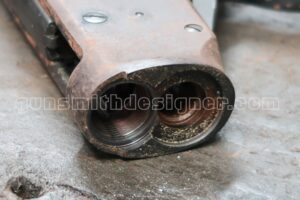
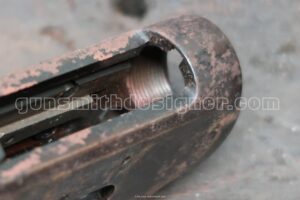
The firearm is in poor condition, the receiver is covered in rust spots.
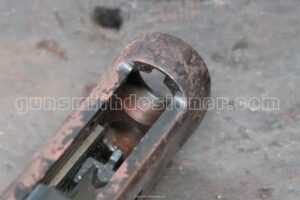
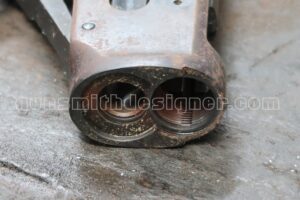
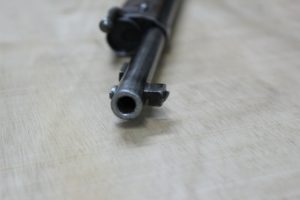
The barrel after disassembly :
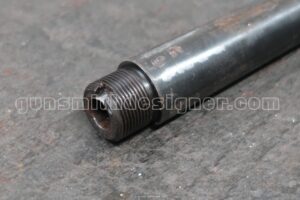
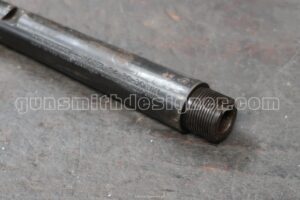
The barrel has much less oxidation than the receiver.
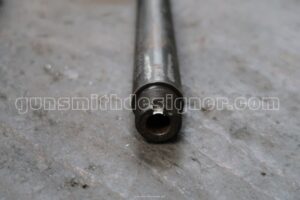
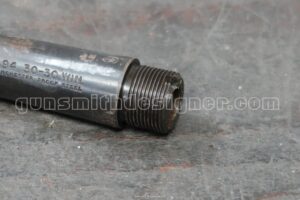
The method :
To better understand the method used, here is a short video :
Conclusion
On the first firearm, the barrel broke loose with a torque of 120 Nm (88.5 ft-lbs). On the second firearm, the barrel came free under a torque of 135 Nm (99.5 ft-lbs).
Needless to say, it is particularly interesting to observe and quantify this difference—nearly a 10% variance between two firearms.
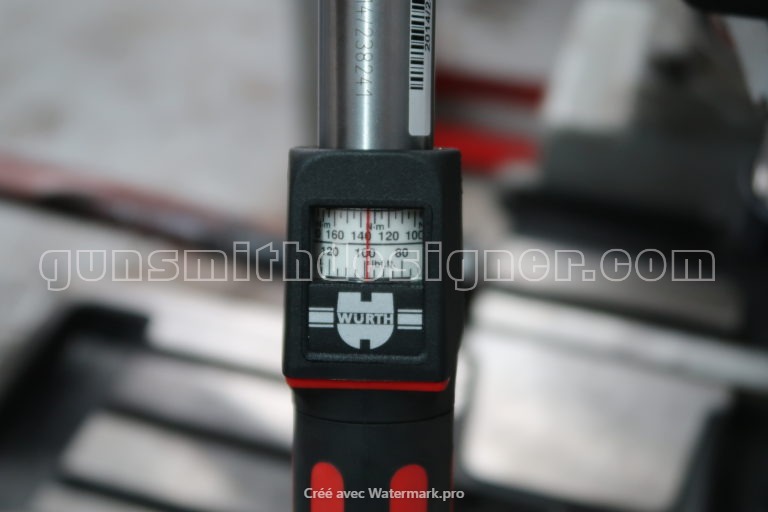
This raises a question: what are the minimum and maximum torque values? What is the torque range used at the Winchester factory when installing a Model 94 barrel in .30-30 Winchester?
I hope to have the opportunity to test this method on other Winchester rifles (of various models and calibers) to refine the technique and gather more data on the subject.
If you have any information that could supplement these two articles, please feel free to share it with me by contacting me, let me a comment or at the following email address: