

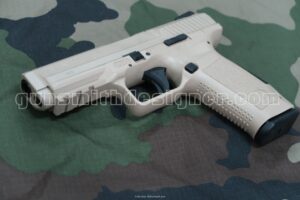
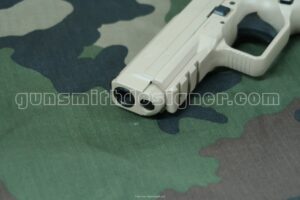
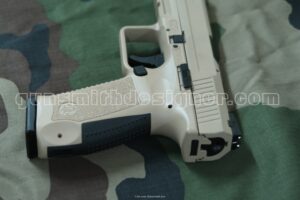
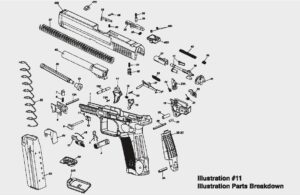
The CANIK pistol seems to have a good number of fans and favorable reviews. Most reports about it look alike. What is hidden beneath its attractive aesthetics? What does a CANIK TP9 SF pistol look like on the inside ?
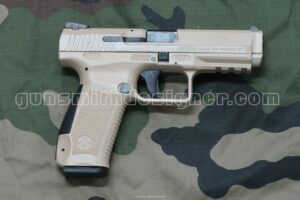
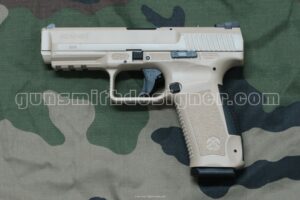
Presentation of the Firearm
Firearm specifications:
-
- Caliber: 9×19;
- Overall length: 230 mm;
- Height (with magazine): 147 mm;
- Height (without magazine): 138 mm;
- Width: 33.5 mm;
- Weight (with empty magazine): 809 grams;
- Magazine capacity: 18 rounds;
- Materials: polymer, steel;
- Locked-breech firearm.
- Link to the Canikarms website: TP9 SF
- Link to the user manual


The Frame
The frame houses the following sub-assemblies:
-
- The trigger / trigger bar;
- The locking block;
- The takedown lever;
- The slide stop;
- The magazine catch;
- The rear housing block;
- The backstrap.
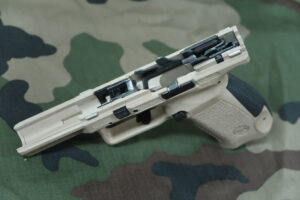
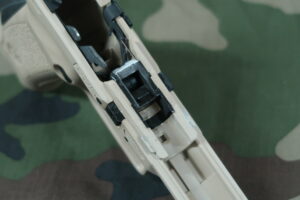
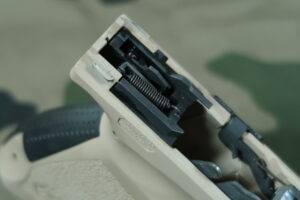
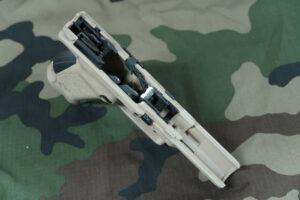
The stripped frame (stripped of all these components) weighs: 104 grams. Material: polymer with 4 steel guide rails.
To date, I am unable to determine the exact type of polymer used.
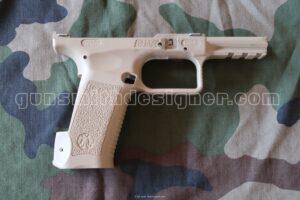
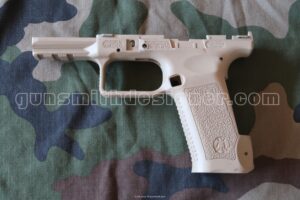
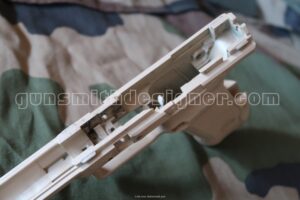
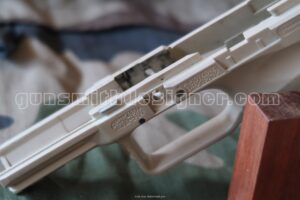
It is a nicely manufactured part. In the following photos, you can see the locations of the sub-assemblies on the frame.
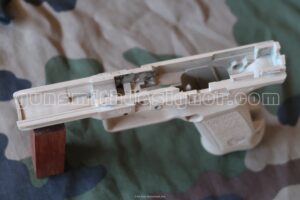
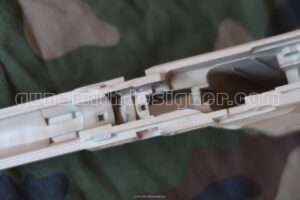
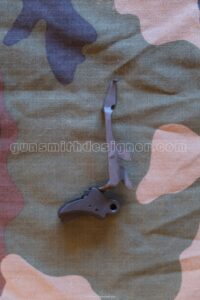
The trigger is made of polymer. In its center, there is a small safety lever. When the shooter pulls the trigger, it disengages the safety. The trigger bar is standard; it is a steel part pinned to the trigger. The trigger return spring connects the trigger bar to the trigger housing at the rear of the grip.

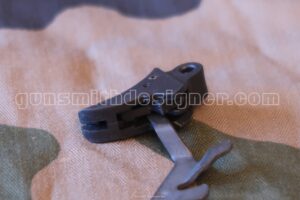
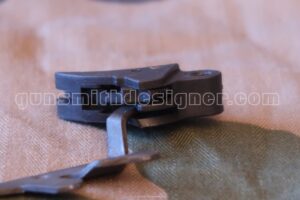
Removing this assembly from the frame is complicated. To do so, you must first remove the takedown lever and then the locking block.
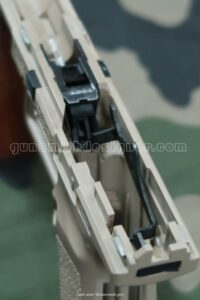
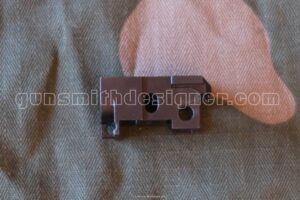
The locking block is a steel part produced by investment casting. This component controls the locking and unlocking of the barrel when cycling the slide. It is a major part of the firearm, absorbing significant shock and vibration. On Glock pistols, this part is known to crack. It is very likely the same on this firearm as well. Slide recoil velocity, recoil spring wear, and ammunition loads are directly linked to this effect.
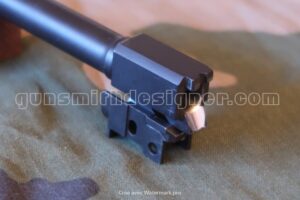 To remove this part, the takedown lever must first be removed. This is not straightforward, as we will see later. The locking block is held in its housing by two pins, one of which serves as the pivot pin for the trigger and the slide stop.
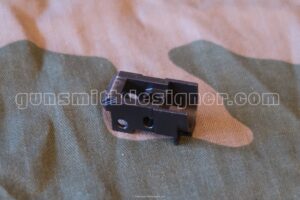
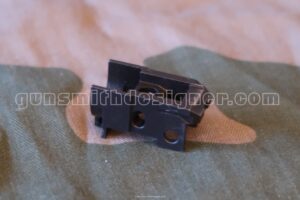
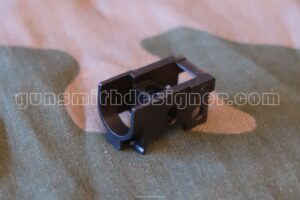
Some walls of the part seem thin to me. How many rounds would it withstand before cracking? A torture test could give us insights on this matter. I am not in a position to conduct such tests at this time.
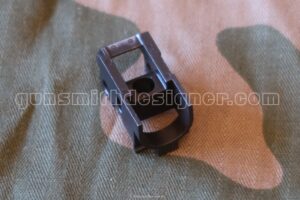
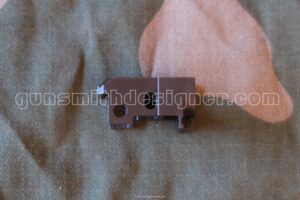
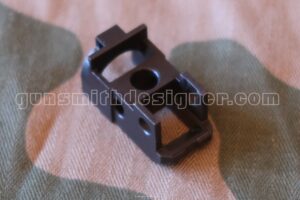
To separate the slide/barrel assembly from the frame, you must pull down the takedown lever. This operates via a small transverse cross-pin that retains the barrel. Moving it out of the way frees the barrel, and freeing the barrel allows the slide to be removed.
This sub-assembly is particularly difficult to extract from the frame. I think it could have benefited from a better design; a pin of about 1.5 mm is very hard to drive out of its housing. With every hammer blow, the takedown lever spring absorbs the impact of the punch.
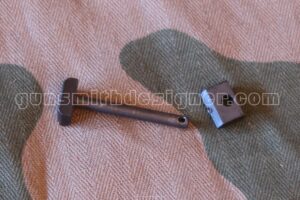
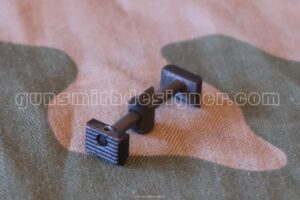
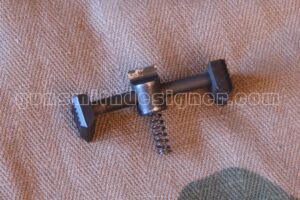
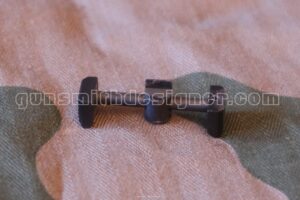
The magazine catch is a steel rectangle. It is an investment-cast part. Its spring is made of a good-diameter steel wire. The magazine catch is ambidextrous. If you wish to switch the button to the other side, you must remove the magazine catch spring from the top of the magazine well to reverse the catch. It is great to offer this feature to customers, but on the CANIK TP9 SF, putting the spring back in place after switching sides is not easy.
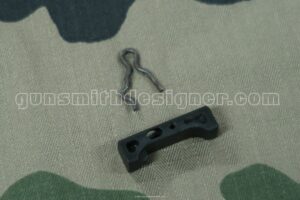
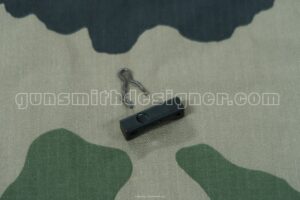
The slide stop is made of stamped sheet steel. Although complex, this part is very well made. The trigger pin also acts as the slide stop pivot pin. Its spring is held in place between the polymer frame and the locking block. To remove the spring from its housing, you must first remove the locking block.
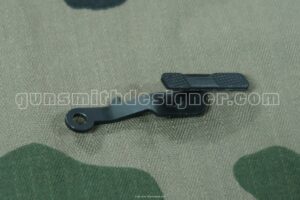
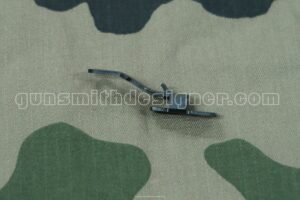
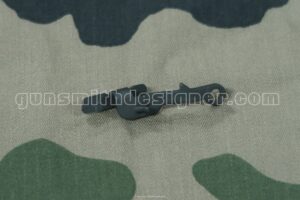
The backstrap is made of polymer. It is removable and interchangeable, held in place by a roll pin. Depending on the shooter’s hand size, the grip volume can be adjusted. For several years now, this feature has become very common.
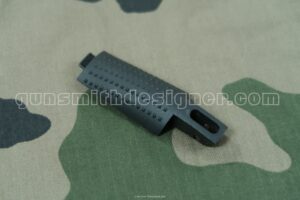
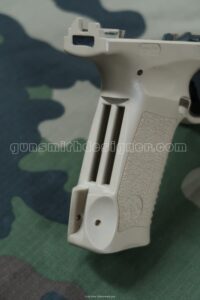
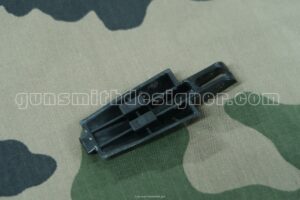
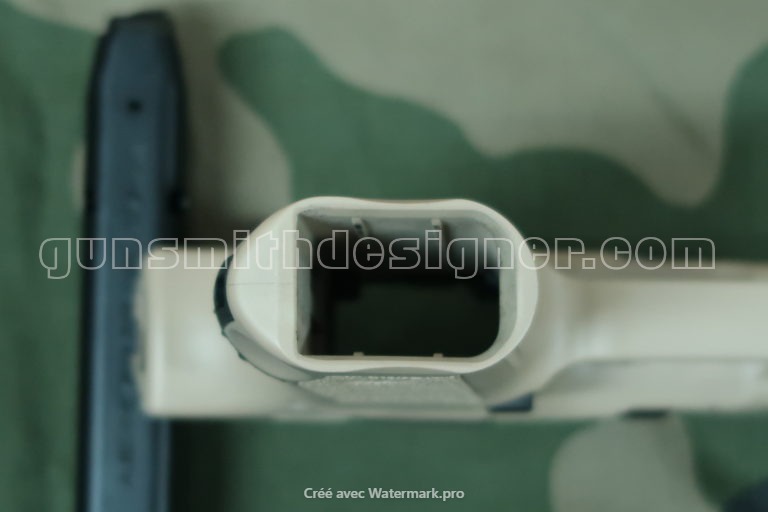
The magazine well features two raised ribs on each side, right and left, to reduce friction and limit the effects of dirt or debris.
The Trigger Mecanism
The trigger housing is a massive steel block. The ejector is integrated into the block. It is an investment-cast part; it would be impossible to manufacture this piece by milling. It contains:
-
- The sear and its spring;
- The sear lever and its spring;
- The trigger return spring.
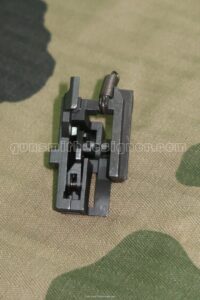
It is held onto the frame by a pin.
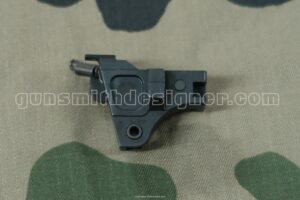
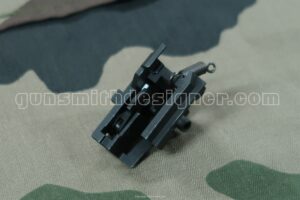
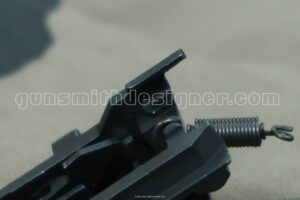
The sear is an investment-cast part. This is the component that catches and holds the firing pin (striker) when the slide returns forward.
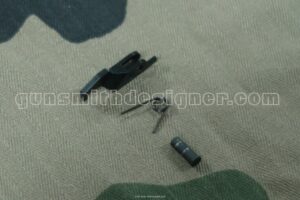
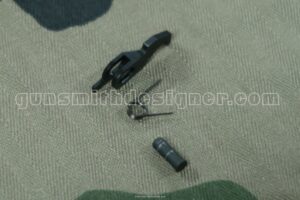
The sear lever is an investment-cast part. This component prevents the sear from dropping. When the shooter pulls the trigger, the trigger bar acts upon this part to release the sear.
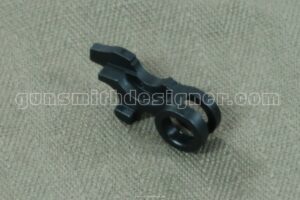
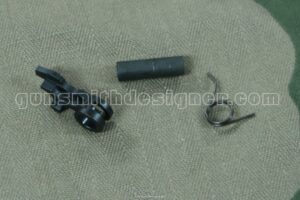
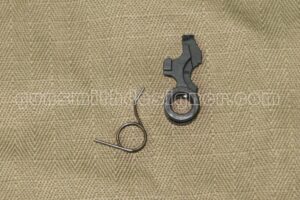
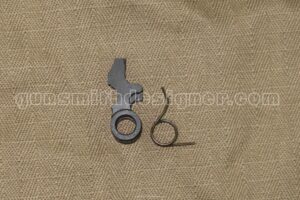
The trigger return spring is connected at one end to the trigger housing and at the other to the rear of the trigger bar.
The Barrel
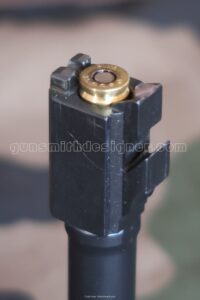
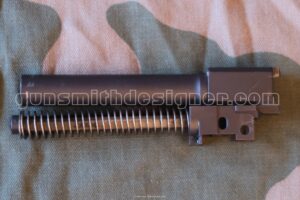
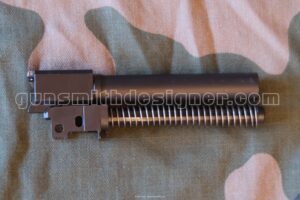
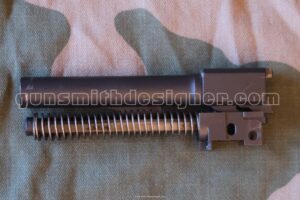
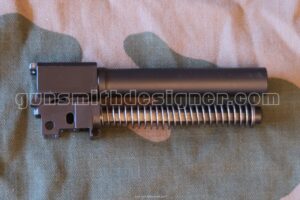
The barrel is made of steel. Its overall length is 113.6 mm. It has a classic shape for a 9mm semi-automatic pistol barrel. It uses a Browning/Colt linkless locking system with camming lugs. The locking surface appears to have less area than on a Glock (particularly in height).
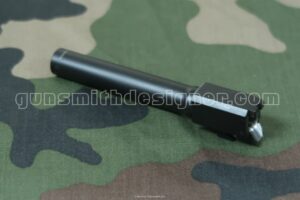
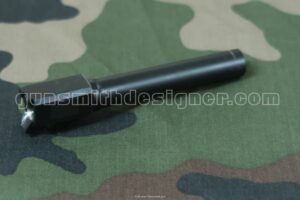
It fits within a bounding box of 113.6 mm x 15.54 mm x 22.4 mm.
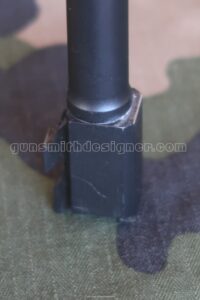
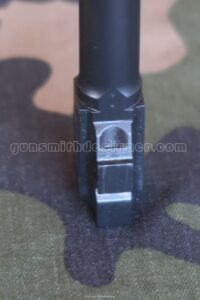
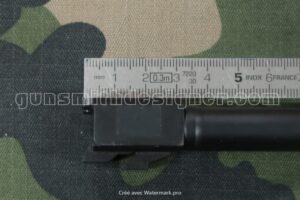
The length of the rectangular breech block is:
 The cylindrical section has an outer diameter of 14 mm.
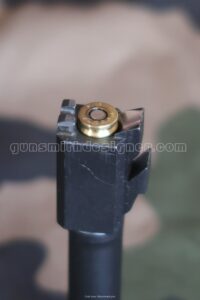
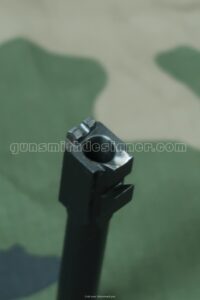
CIP standards specify the following minimum bore dimensions for this caliber:
-
- Land diameter: 8.82 mm;
- Groove diameter: 9.02 mm;
- Rifling twist rate: According to the manufacturer: 1 turn in 16 inches (406 mm); according to CIP standards: 250 mm;
- Number of grooves: 6 grooves, left-hand twist.
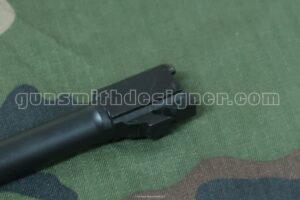
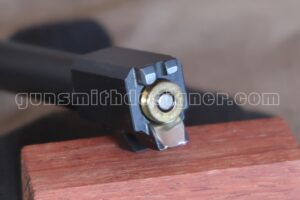
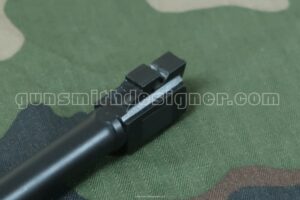
The feed ramp is very clean and appears to be chrome-plated, as does the bore.
Barrel Locking
The swinging link(s) of the Colt-style locking system have been replaced by inclined camming surfaces. The principle remains the same. Depending on the position of the barrel relative to a reference surface, it sits in the upper position (locked) or lower position (unlocked). In the photos below, you can see the position of the barrel relative to the reference surface, which is the locking block.
The Slide
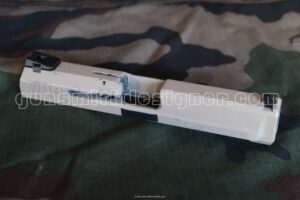
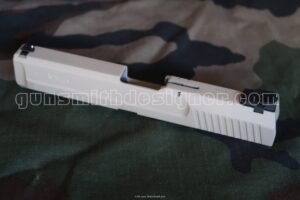
The slide is a massive, very well-machined steel part. It fits within a bounding box of 191 mm x 28 mm x 33.8 mm. Its stripped weight (including rear and front sights) is 352 grams.
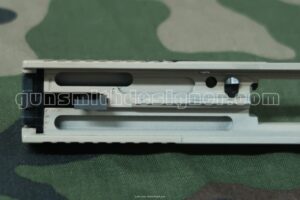
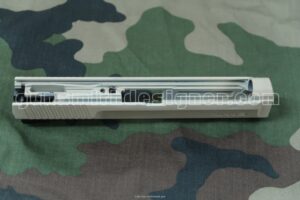
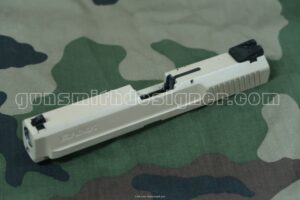
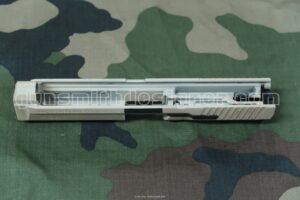
Markings:
-
- On the right side: TP9SF, CENTURY ARMS INC GEORGIA, VT
- On the left side: CANIK, 9×19
A sand-colored (FDE) finish coats this part. It does not appear to be very durable.
The slide is guided by the 4 small steel inserts in the frame (two on each side). The dimensions of the slide rail grooves are 1.7 mm high by 25.2 mm wide (edge to edge).
Overall, disassembling the slide is a real pleasure and allows for quick stripping with very few tools. I did not attempt to remove the sights.
Slide travel (from its forward stop to its rear stop): 37.5 mm.
The stripped slide
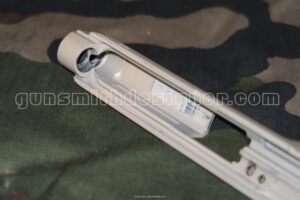
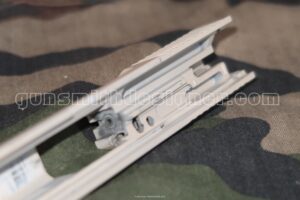
The loaded chamber indicator is a small piece located on top of the slide. Its pivot pin has a diameter of 2 mm and is a spring roll pin (rolled steel sheet). When raised by the presence of a chambered round, it reveals a small red dot on each side.
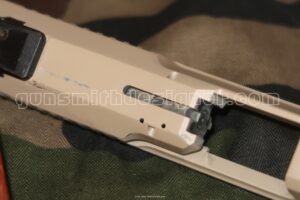
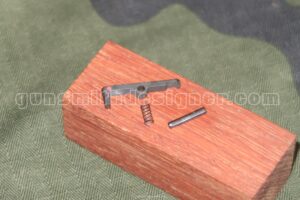
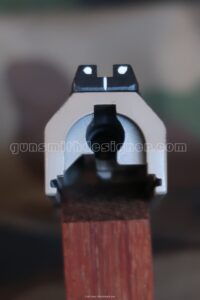
The sights are removable and dovetail-mounted. The front sight measures 3.8 mm wide.
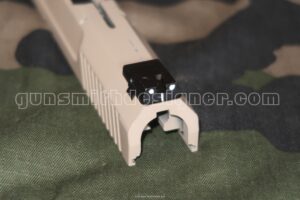
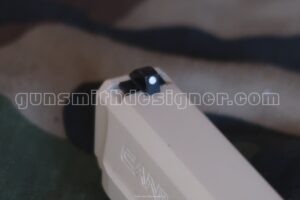
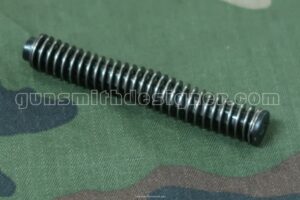
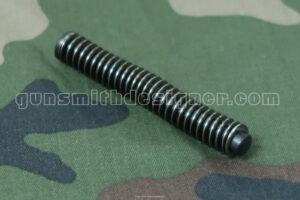
The guide rod and its recoil spring form a single captive assembly. The guide rod is made of steel with a solid diameter and has a noticeable weight.
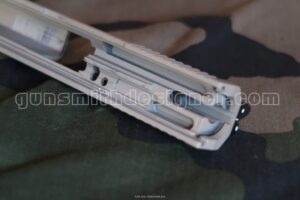
The extractor housing is complex; I hope the photos convey this complexity.
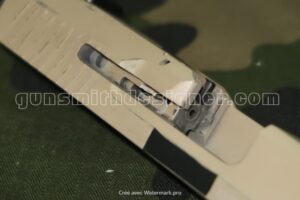
The extractor is an investment-cast steel part, measuring 4.92 mm wide. One interesting feature of this firearm is the extractor pivot pin. Indeed, there is no need to punch out a pin to remove the extractor and clean its channel. The pin is actually a spring-loaded plunger. To remove the extractor, you simply push this plunger/pin down into the slide. Once depressed far enough, the extractor can be lifted out.
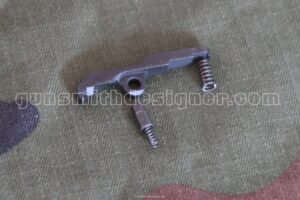
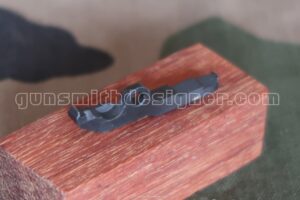
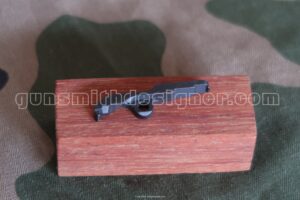
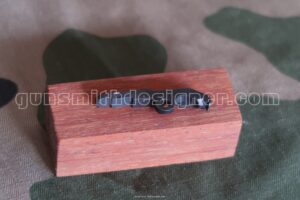
The firearm is equipped with a firing pin safety. It is an investment-cast steel part that acts on the front end of the firing pin (striker), which explains the latter’s shape.
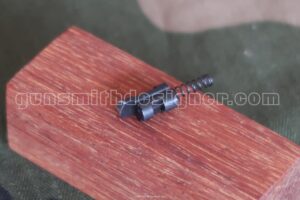
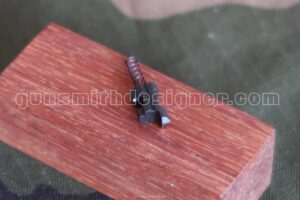
The firing mechanism looks very similar to that of a Glock pistol.
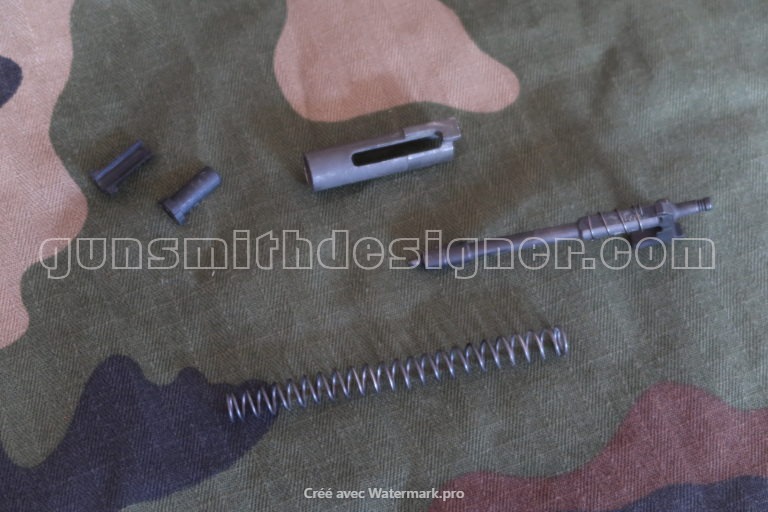
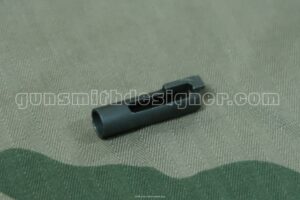
The firing pin sleeve is made of steel. It measures 33.6 mm long, with a bore diameter of 9 mm. I believe it is an investment-cast part (though not obvious) because a very slight “orange peel” texture is visible on the inside. On a Glock, this sleeve is made of polymer.
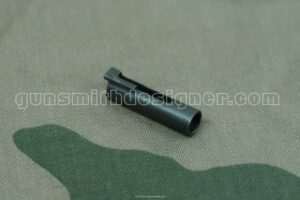
The firing pin (striker) is an investment-cast steel part, measuring 65.4 mm in length.
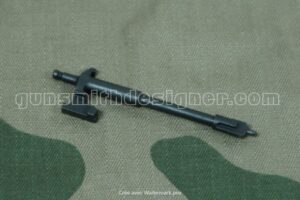
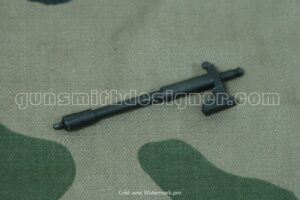
The firing pin spring has a diameter of 6.8 mm, a free length of 71.5 mm, and a wire diameter of 0.7 mm.
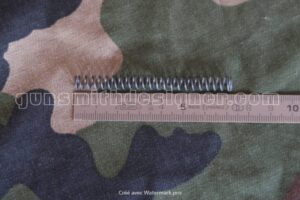
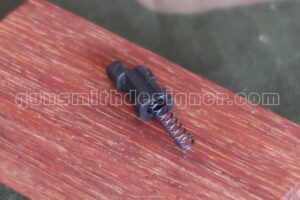
The firing pin return spring has a diameter of 6 mm, a free length of 11 mm, and a wire diameter of 0.4 mm. The Glock does not have a firing pin return spring. In the photo below, this spring is mounted around the firing pin.
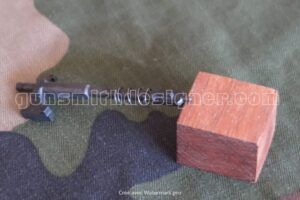

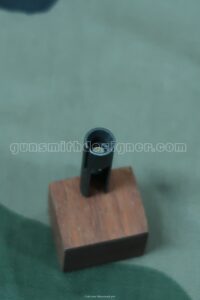
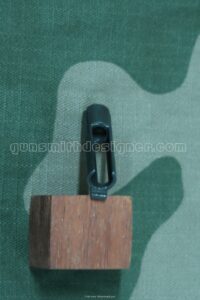
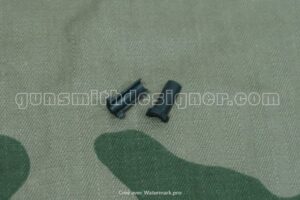
Two small polymer half-cylinders (spring cups), 13.6 mm long, hold the assembly in place on the firing pin sleeve. Outer diameter: 5 mm; inner diameter: 3.7 mm.
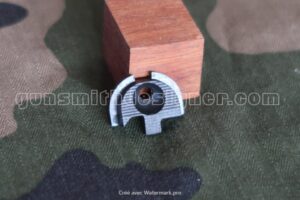
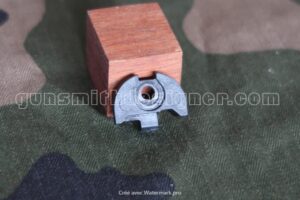
The slide cover plate is made of polymer with a steel insert. This part is very easy to remove, which is not the case on a Glock pistol.
The Magazine
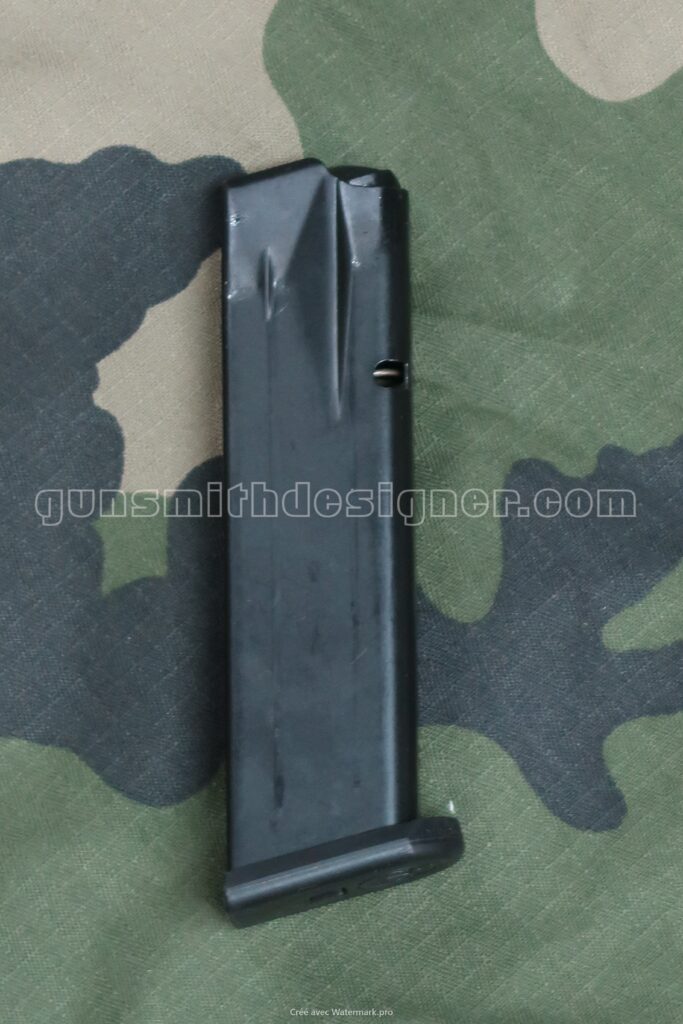
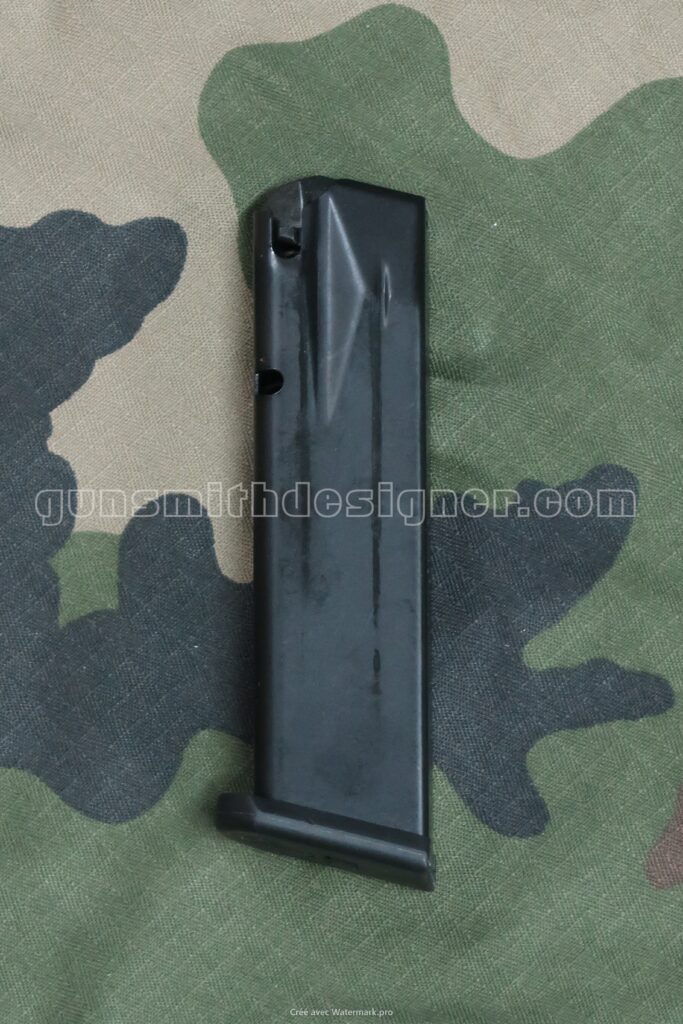
Specifications :
-
- Magazine dimensions: 122.2 mm x 41.5 mm x 28.4 mm;
- Magazine body cross-section: 32 mm x 20.5 mm;
- Magazine height: 122.2 mm;
- Magazine capacity: 18 rounds;
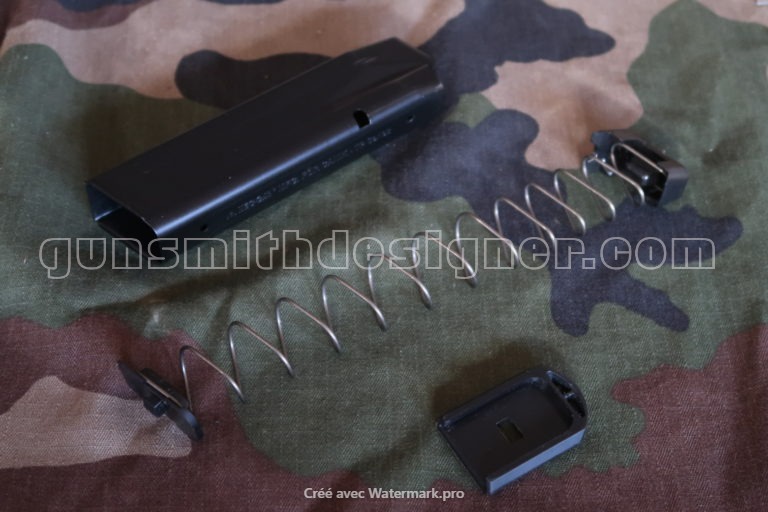
- Number of parts: 5.
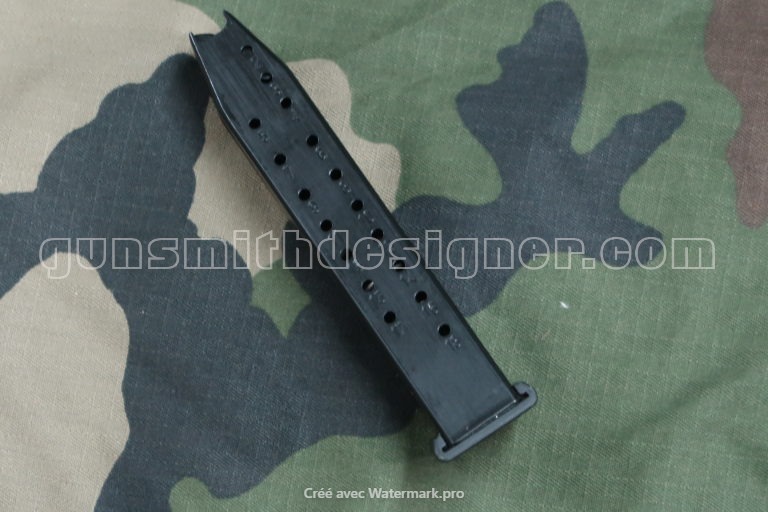 The magazine is manufactured by MEC-GAR. It is very well finished. The body is made of steel, while the follower, locking plate, and floor plate are made of polymer. It disassembles very easily.
Conclusion
Beneath modern and robust appearances, we discover a firing mechanism that is not derived from Glock, but rather from the MAB or Browning 1910… It seems difficult to find truly innovative mechanisms, even on firearms that look modern.
As we have seen above, many parts are manufactured using the investment casting process. It will be interesting to see over time how these numerous small-volume cast components hold up, particularly the locking block.
While disassembly is easy for the slide and its sub-assemblies, I am disappointed by the removal process of the takedown lever. This can cause issues if one wishes to replace certain accessories.