

I would like to continue our comparative work by studying a Colt Detective revolver in .38 Special caliber. This article echoes a previous piece on the Charter Arms revolver; both are equivalents, yet they stem from different construction methods, cultures, and eras. Conducting this type of comparison is of great interest because, by studying iconic models, it allows us to define the master plan of technical and cultural evolutions tied to small arms design. In this case, we are not merely looking for a description of the Colt Detective, but rather an incentive to reflect on the overarching design philosophy of revolvers.

The particularly dark bluing of this firearm limits the visibility of fine details in the photos; nevertheless, I hope you will find everything you are looking for.
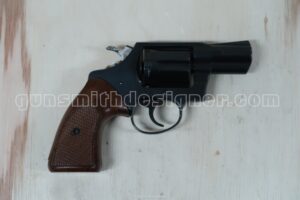
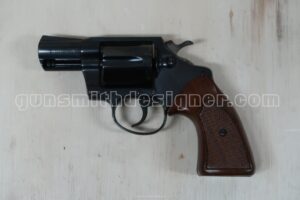
The Colt Detective is an emblem of the brand, frequently featured in American movies where police officers and gangsters of a certain era face off. This firearm was manufactured between 1927 and 1986, and then again from 1993 to 1995. The model evolved over time, so for now, we will limit our study to this specific version.
General Specifications
-
- Thickness: 35.6 mm
- Height: 98 mm
- Overall length (barrel/grip diagonal): 198 mm
- Caliber: .38 Special
- Capacity: 6 rounds
- Barrel length: 54.2 mm
- Weight: 649 grams
- Action: Single and double action
The Frame
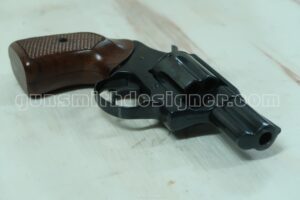
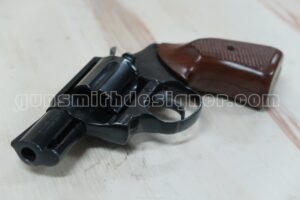
The frame is made of forged and machined steel. The grip frame is an integral part of the main frame, which is not the case for all revolvers. Simplification through modular division was not applied to this component.
A deep black bluing is applied over well-polished surfaces.
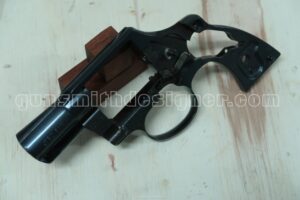
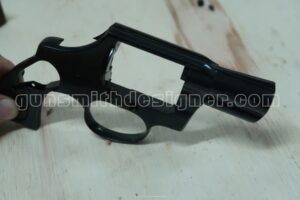
The frame is the centerpiece of the firearm onto which all other components are mounted. The pivot pins for the internal mechanism parts are fixed onto the frame. They are not user-removable. Should one of these pins break, extracting the remaining piece would be relatively easy since the pins pass all the way through.
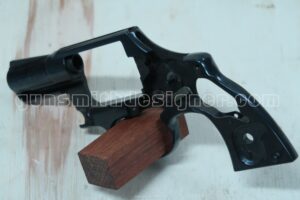
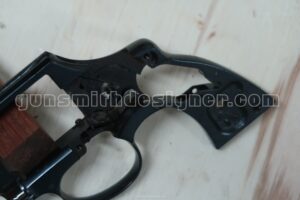
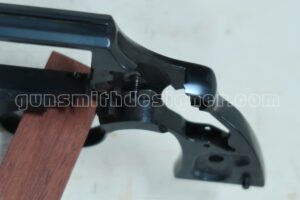
Underneath the grip panels, die-forging marks are visible. The grip is of the square butt type, though round butt versions also exist.
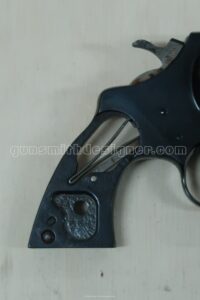
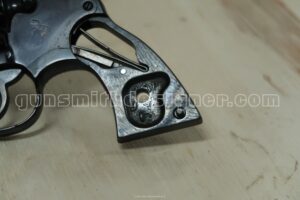
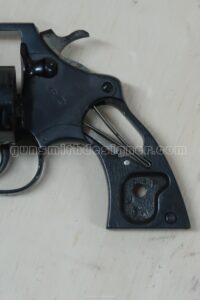
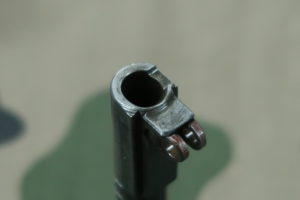
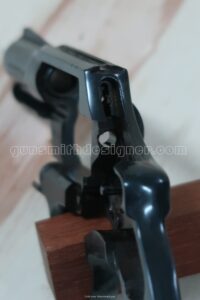
The firing pin bushing is a separate insert pressed into the frame. It is therefore potentially replaceable with the appropriate tooling. The bluing on this bushing is still intact, indicating the firearm has seen very little use.
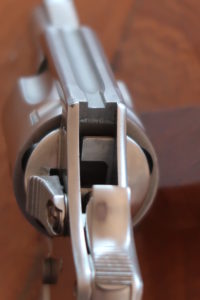
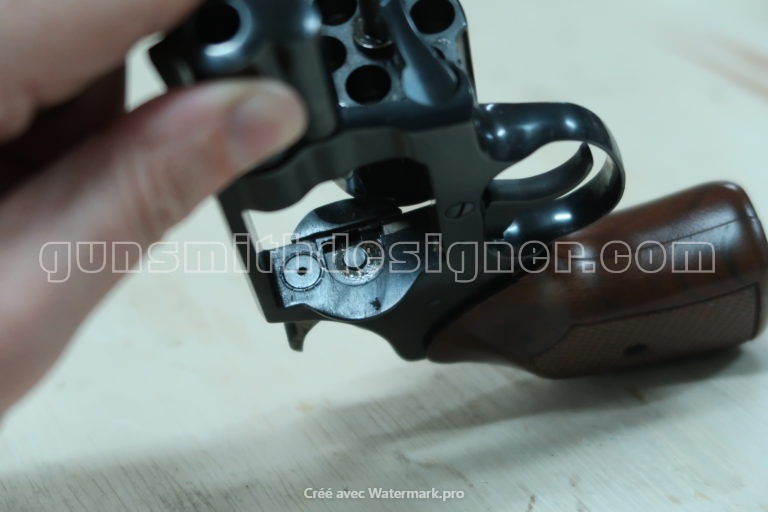 The photo above also shows the recess housing the part that rotates the cylinder: the hand (or pawl). If you stand behind the grip and use the cylinder latch as a reference point, you can see this recess is located on the left, meaning the cylinder rotates clockwise. On many other revolvers, it is the exact opposite: the hand is located on the right, and the cylinder rotates counterclockwise.
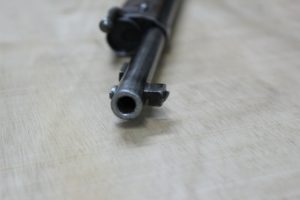
The rear sight is milled directly into the frame, and the front sight is machined as part of the barrel.
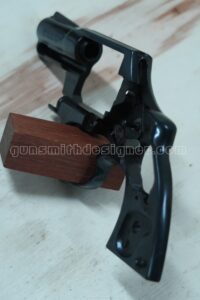
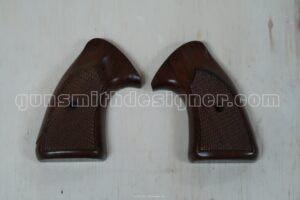
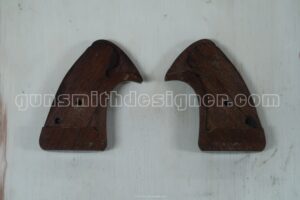
The grip panels are made of wood. They are held together by a single through-screw. In addition to this screw, a steel locating pin mounted on the frame limits any movement of the grip panels.
The Mechanism
The Colt Detective revolver operates in both single and double action.
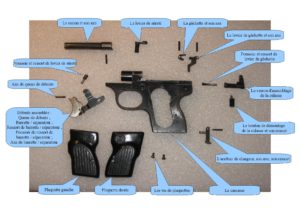
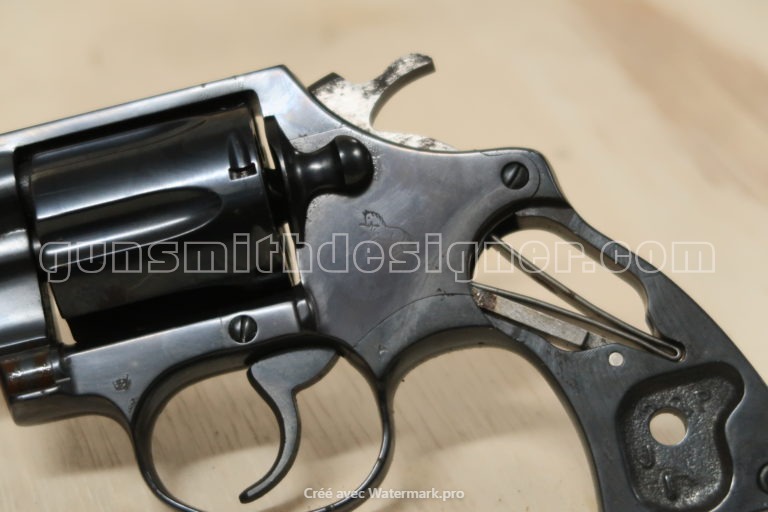 The mechanism is “hidden” beneath the sideplate. To access it (from the left side of the firearm), you must unscrew the two sideplate screws and then, using a preferably non-metallic tool, gently pry up the plate. Underneath, you will find the following:
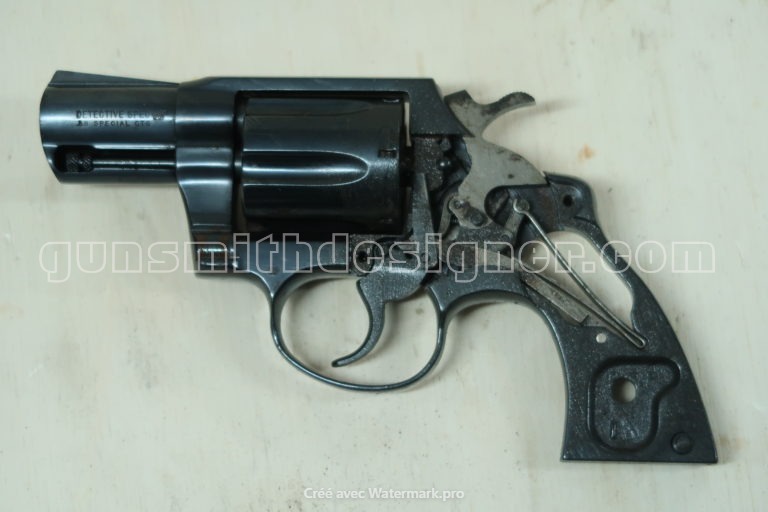 Below, you can see the position of the internal parts when the hammer is cocked and when it is at rest.
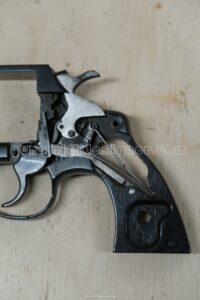
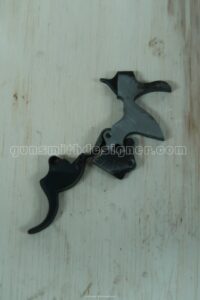
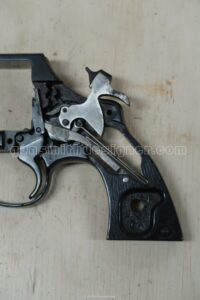
Revolver mechanisms have evolved very little over time. Generally speaking, inside a modern revolver you will find: a hammer, a trigger/sear, a hand (pawl), a mainspring, a firing pin safety mechanism, and a cylinder locking mechanism.
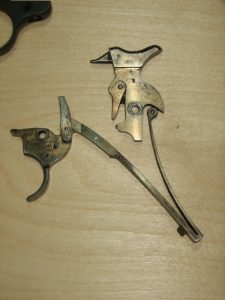
Removed from its housing, the firing mechanism looks like this:
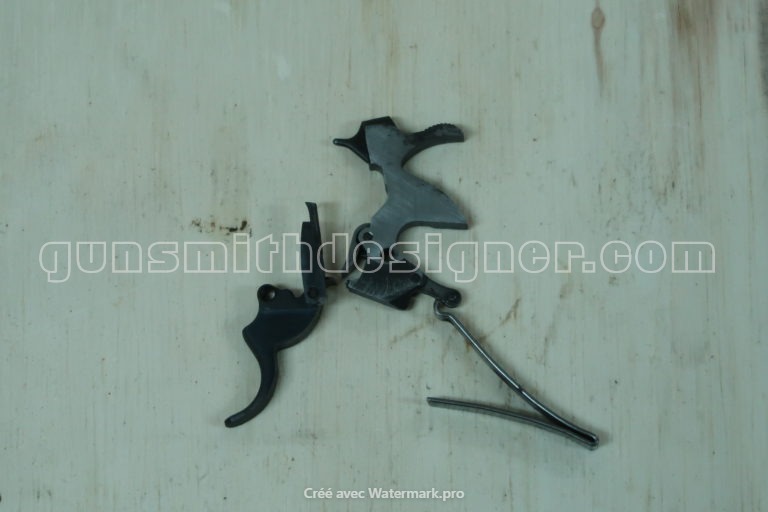 The mainspring is V-shaped. It is a modern V-spring, a far cry from that of the French Model 1892 revolver.
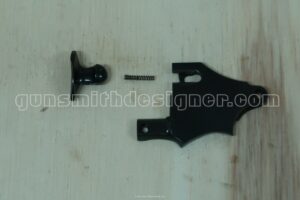
Once you decide to open the sideplate, you must keep a sharp eye out so as not to lose anything and to remember the exact placement of each part. The cylinder latch operating lever is mounted on the sideplate, which fits flush into the frame. Upon reassembly, care must be taken to properly align the cylinder latch stud with its operating lever.
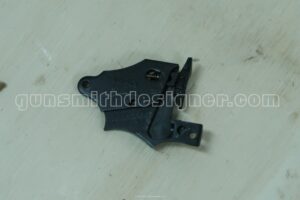
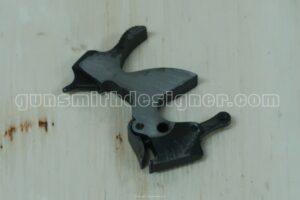
The hammer is made of machined steel and features a very interesting shape. One cannot really say it underwent manufacturing optimization. A strut links it to the mainspring.
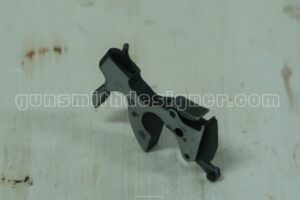
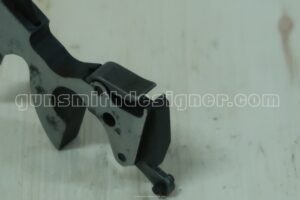
The firing pin is pinned directly onto the hammer. The lateral sides have been polished so thoroughly that it becomes difficult to locate the firing pin retaining pin. Should it need replacement, one would have to proceed by trial and error to find the pin’s location and punch it out of its housing.
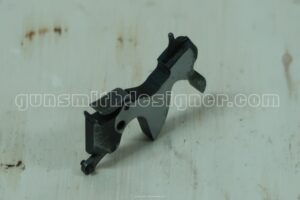
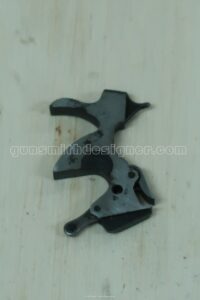
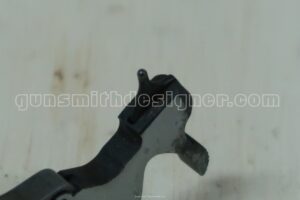
The trigger is made of machined steel and has a classic profile.
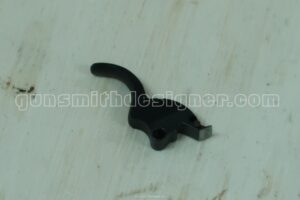
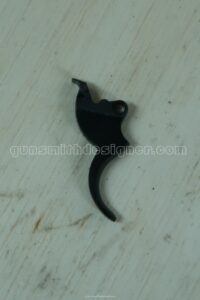
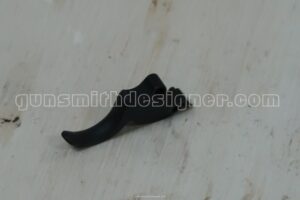
The hand (pawl) is made of steel; I found no traces of investment casting (MIM). This part, carried by the trigger, ensures cylinder rotation. Whether you cock the hammer (single action) or pull the trigger (double action), the hand rotates the cylinder (once unlocked) and brings a fresh chamber into alignment with the barrel bore.
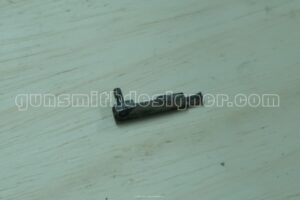
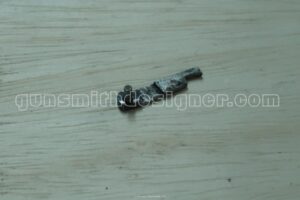
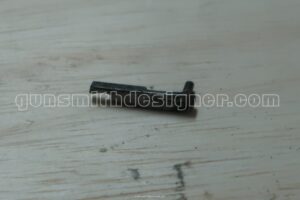
Like any good modern firearm, the Colt Detective is equipped with a firing pin safety. The trigger controls this safety system. Unless the shooter pulls the trigger, firing cannot occur.
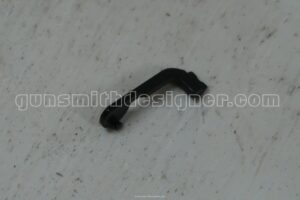
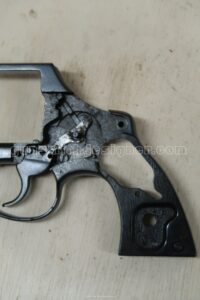
The rebound lever pivots on its pin and is actuated by the V-shaped mainspring. It acts upon the hand (and thus the trigger) as well as the cylinder bolt. Here, I am not referring to the latch that prevents the cylinder from swinging out, but rather the bolt that prevents the cylinder from rotating.
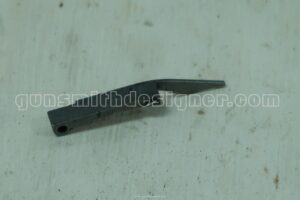
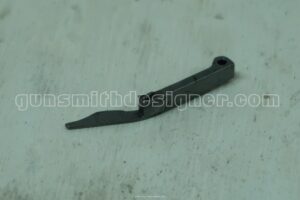
The cylinder has two locking devices: the first allows or prevents the cylinder from opening—that is, swinging out to the left side of the firearm.
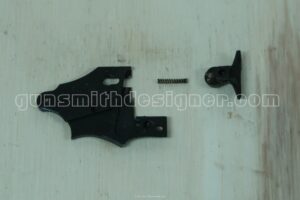
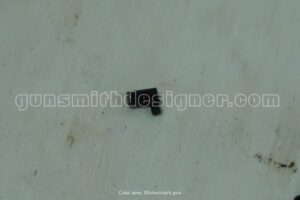 The second prevents the cylinder from rotating around its axis. In other words, the cylinder bolt keeps one of the cylinder chambers aligned with the bore axis. Below is the cylinder bolt and its spring.
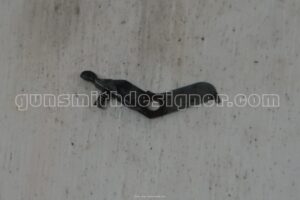
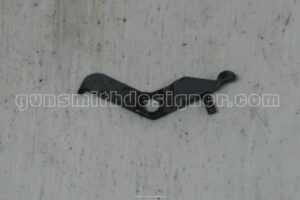
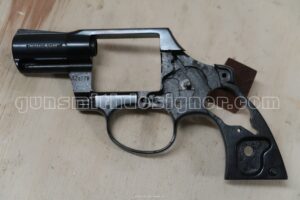
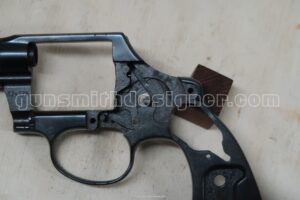
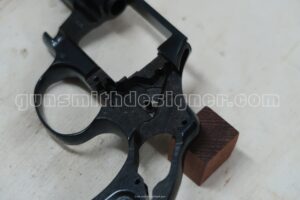
Once the mechanism is completely stripped, you are left with the empty frame.
The Cylinder and Crane
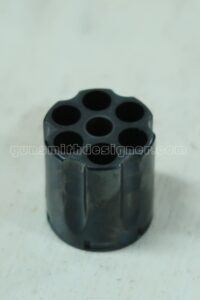
-
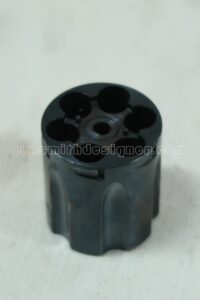
- Cylinder diameter: 35.6 mm
- Cylinder length: 39.7 mm
- Cylinder capacity: 6 rounds
- Barrel-to-cylinder gap: 0.15 mm
- Chamber exit diameter: 9.02 mm
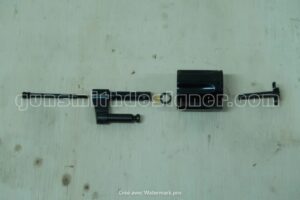 The cylinder ratchet (extractor star) holds particular significance for me. On a revolver, many different ratchet designs exist—whether in the shape of the extractor portion, the geometry of the indexing teeth, or the center pin…
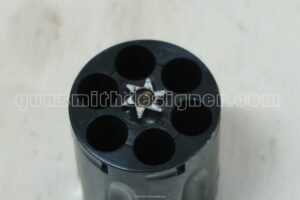
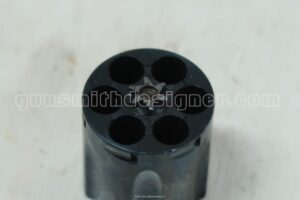
I believe the ratchet teeth used to index the cylinder speak volumes about the designers’ choices and the industrial tooling employed. These notches are more or less complex depending on the manufacturer and revolver model. Here, they are relatively simple. Throughout this series of articles on revolvers, we will see what those design choices were and during which era they were made.
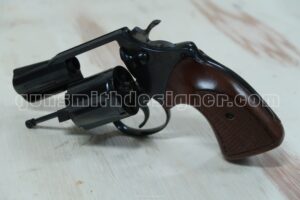
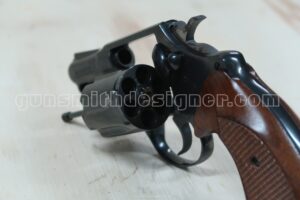
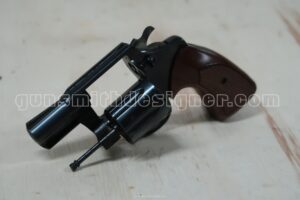
Six locking notches are milled into the outer cylindrical surface of the cylinder. These serve as seats for the cylinder bolt, preventing rotation and ensuring a chamber remains aligned with the barrel. The notches are not centered directly over the chambers, which is hardly surprising considering the thin wall of metal remaining between the outer diameter of the cylinder and the interior of each chamber.
The cylinder latch is housed in the frame. Its role is to prevent the cylinder from swinging out to the side. On the Colt Detective, the cylinder swings out to the left. The latch engages a dedicated recess at the center of the extractor star.
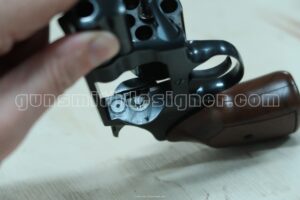
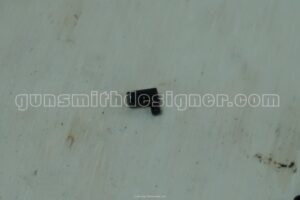
The crane (yoke) consists of two parts: the pivot pin that fits into the frame is pressed into the body of the crane. Below, you can see the location of an assembly pin.
The Barrel
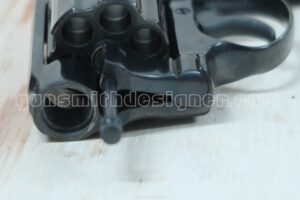
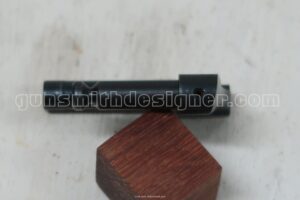
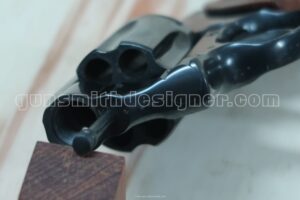
The barrel is made of steel and machined from a single piece of metal. After 1972, the ejector rod sits inside a shrouded recess milled beneath the barrel. It is surprising that this protection was not part of the original design, as even a slight bend in the ejector rod would render the firearm inoperable due to the difficulty or impossibility of ejecting spent cases.
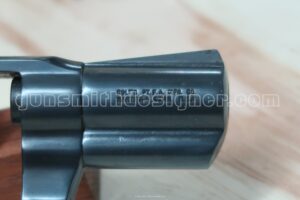
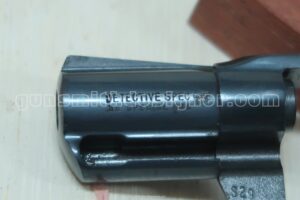
Barrel Specifications:
-
- Barrel length: 54.2 mm
- Threaded shank length: 18.2 mm
- Diameter ahead of the threads: 12.3 mm
- Thread diameter: 14 mm
- Thread pitch: 32 TPI (threads per inch), or 0.79 mm
- Barrel-to-cylinder gap: 0.15 mm
The barrel removed from the frame:
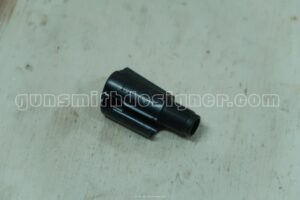
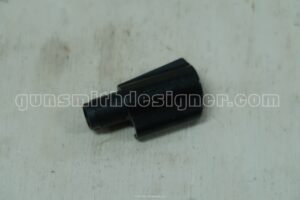
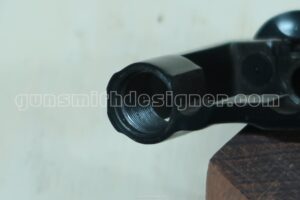
It is secured to the frame by torquing it to a specific value. There is no retaining pin and no trace of threadlocker. I did not have the time to build the fixture required to measure the exact torque value. Such a fixture must be designed carefully, as it needs to properly support the cylinder window to avoid twisting the frame. A barrel vise block that wraps closely around the barrel contour is also required so as not to mar the edges of the part.
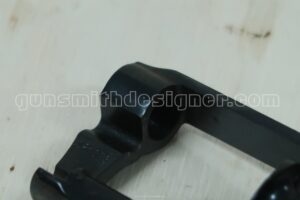
The barrel mounting area on the frame:
The Aluminum-Frame Detective Revolver
An aluminum-frame version of this firearm also exists. The weight is considerably reduced, dropping from 649 grams down to 470 grams—a difference you can genuinely feel in the hand.
Because the aluminum-frame specimen I handled was not in good condition (oxidation on the metal parts and heavy wear on the black anodized finish), I chose not to include photos of it in this article. However, I wanted to verify whether the barrel thread diameter and pitch were identical to those of the steel-frame version. Given the lower strength of aluminum or for other engineering reasons, did the manufacturer alter its machining specs between versions?
Here are the measurements recorded:
-
- Threaded shank length: 18 mm
- Diameter ahead of the threads: 12.3 mm
- Barrel thread diameter: 14.1 mm
- Thread pitch: 32 TPI, or 0.79 mm
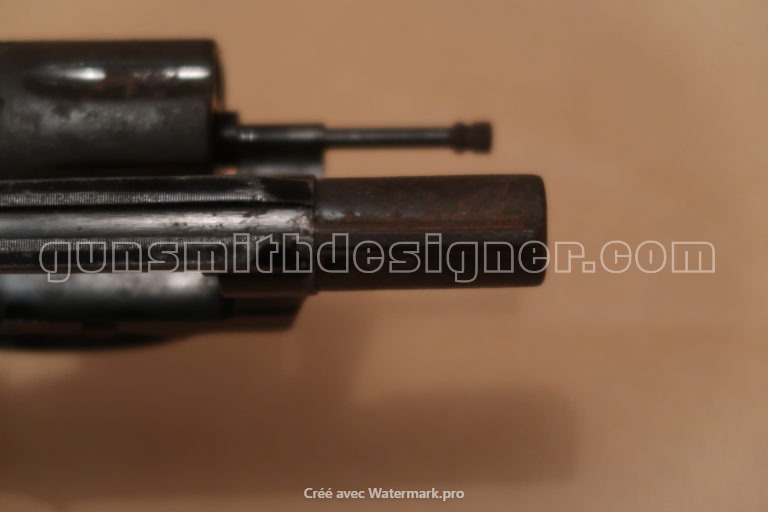
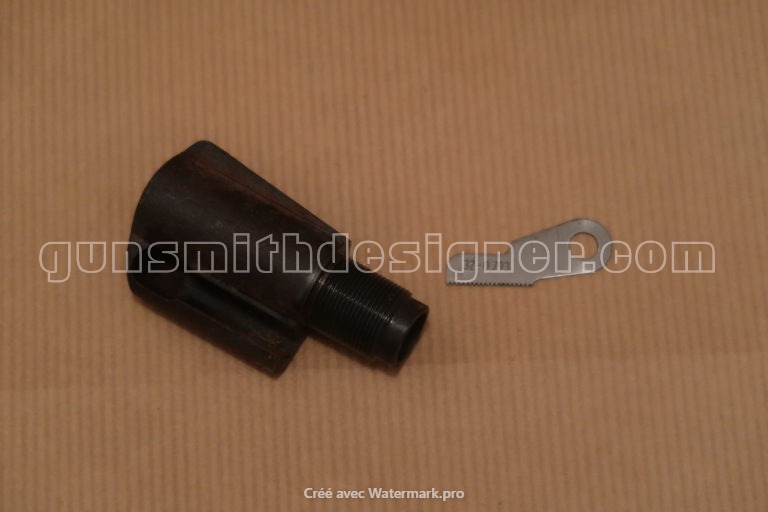 There is no dimensional difference between the two versions. However, one technical detail is particularly striking: the torque required to tighten the barrel into the frame is very low. In the photo below, you can see the alignment of the top centerline of the barrel (front sight axis) relative to the top centerline of the frame (rear sight axis) after being hand-tightened. Very little rotation remains for the barrel to return to its original indexed position. Furthermore, there is no threadlocker and no pin to prevent the barrel from unscrewing.
 One drawback of a defensive firearm (intended for regular concealed carry) with an aluminum frame is finish wear. Gunsmiths are accustomed to re-bluing steel parts, whereas anodizing is a far less common process in standard workshops.
Conclusion
As with any firearm from a major manufacturer that has undergone a long evolution over time, one cannot fault the Colt Detective for any lack of fit and finish.
Everyone has their preferences; as for me, I am not a huge fan of this mechanism. I believe it was never fully optimized and that certain parts are not easy to fit when replacements are needed. This stems, I think, from the firearm’s history. Indeed, the version before us is the evolution of a design born around the 1920s. Likely out of a desire to preserve the model’s identity, no profound mechanical changes were made aside from the addition of the firing pin safety.
Through this series of articles on revolvers, I hope to provide you with the tools needed for your own analyses and to sharpen your critical eye so you can make informed choices without relying solely on a salesperson or technician. This series will continue as opportunities and inspiration arise. I hope to have the honor of presenting comparable models from the following brands: Smith & Wesson, Taurus, Rossi, Ruger, Manurhin, etc.
At what point in our journey will we be able to define the quintessential revolver—that is, the firearm that combines all the advantages of its category with zero weaknesses (regardless of price)? I already have a small idea on the matter, but I will let you explore the upcoming articles and form your own opinion.