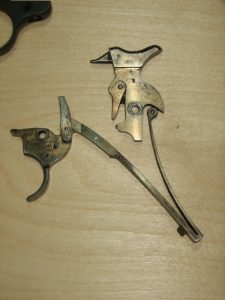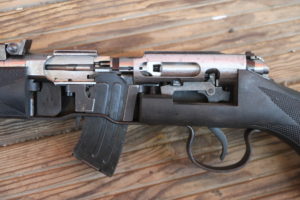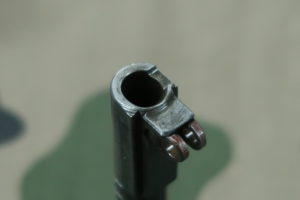


As we have seen in previous articles on the Charter Arms Undercover revolver and the AMT Backup II pistol, some designers use the principle of simplification through division to create a product.
AMT uses simplification by division on the slide of the Backup II pistol (the slide of this firearm is made of several pieces), whereas Charter Arms applies it to the frame of its revolver (the frame is made of several pieces). This raises a few questions :
- Is it possible to generalize this process to all major components ?
- Does a firearm exist that incorporates this principle across a large portion of its parts, and especially its major components ?
- Is there a company that saturates one of its products with this principle.
The Jäger Pistol
While browsing the internet, I found the answer to my question at the following address: The Jägerpistol – German 1914 : the Jäger pistol. The site discusses the history of this firearm, which I will not cover here since I am only interested in the technical aspect. Nevertheless, it seems that 13,000 of these firearms were manufactured.

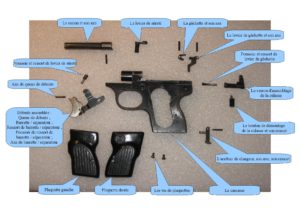
Here are the photos of the Jäger pistol featured on that site :
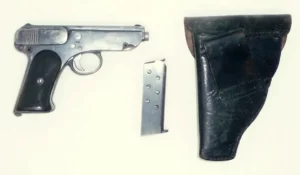
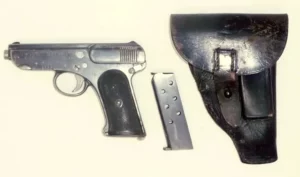
The disassembled firearm perfectly illustrates this principle of simplification by division.
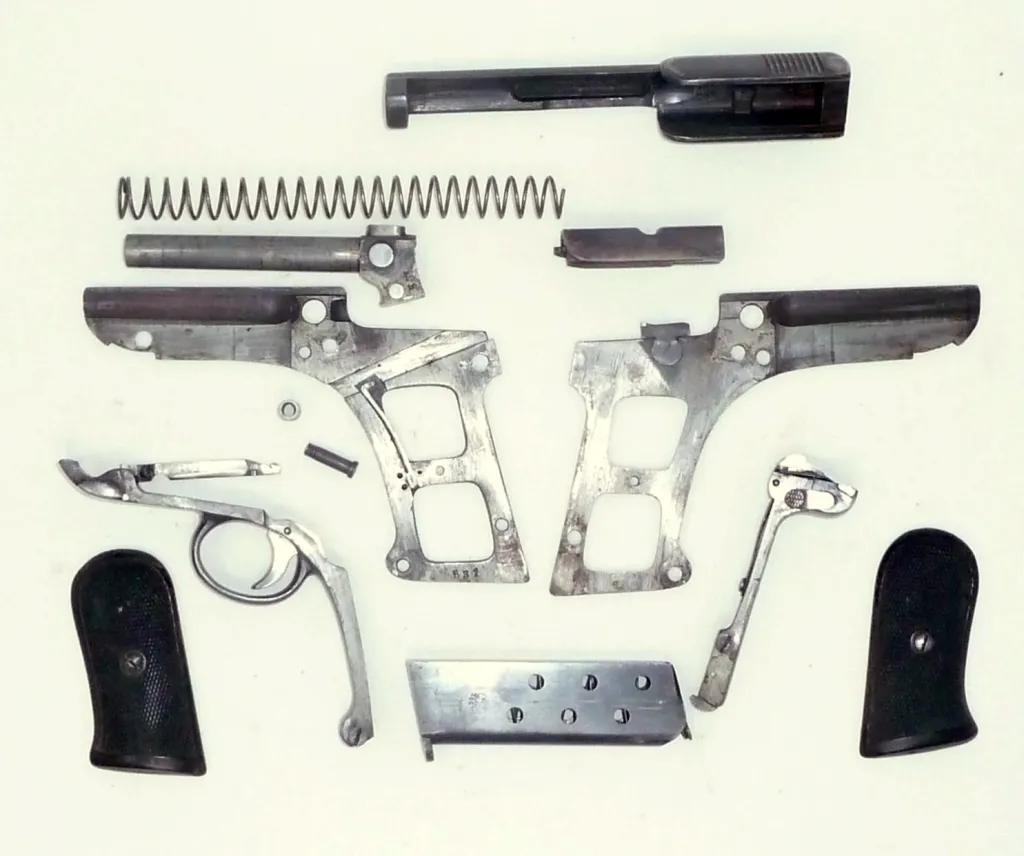
As you can see for yourself, simplification by division has heavily defined this firearm. One could almost say that it was used to excess on this model. In place of a traditional frame, this pistol has two side plates: a right one and a left one… I won’t say any more, the photos speak for themselves.
Note that the caliber (probably 7.65 Browning / .32 ACP) does not require a locked breech. This makes it possible to further simplify and lighten the mechanism.
Conclusion
Even today, this design is not widespread. What would be the value of such a firearm today?
Could we ever see a modern Jäger reappear? How many rounds can it withstand ?
Perhaps the future will allow me to get my hands on one of these firearms and photograph it from every angle.