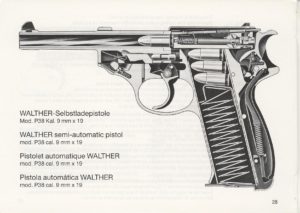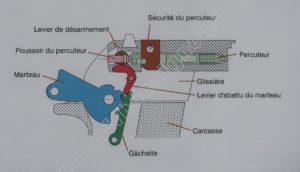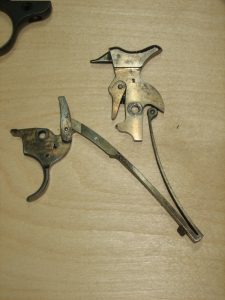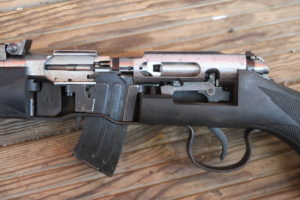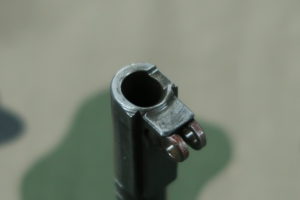


Whether one is a firearms enthusiast or not, studying firearm mechanisms is highly interesting for several reasons. Unfortunately, it is not always easy to see the different movements, the functions of the parts, and how they interact with one another. The internal components are ‘enveloped’ within the body of the subassembly or assembly, hidden from the observer’s view, thereby limiting the understanding of the mechanism right before their eyes.
What is an educational weapon ?
One effective way to perfect one’s knowledge consists in acquiring, handling, and observing educational (cutaway) weapons. What is an educational weapon? An educational weapon is a real firearm of which certain parts, often the major components, have been machined.
The definition provided in french decree : No 2013-700 of July 30, 2013 (section 1 / chapter 2: other weapons/article: 3) is :
3 ° – Educational weapon : an authentic firearm on which cutaway sections or operations have been performed to allow the observation of its internal mechanisms, without altering its operation, and wich has not undergone the decommissioning (desactivation) process.
Each of these machining cuts is a window into the internal functionalities and interactions. They improve the student’s field and depth of view. The successive steps performed by the user, from loading to firing, then become visible. By repeating the cycle at will, the student discovers or rediscovers the complete kinematics of the firearm.
Sectioning and machining are destructive methods. The firearm loses its ability to fire live ammunition—and therefore its capacity to cause harm—but acquires new qualities to embark on an educational and/or promotional career. It can serve as an eye-catcher at a trade show, attracting the attention of the curious bystander, the connoisseur, or even both combined in a single person.
It is obvious that these weapons are not meant to be fired. They are only useful for instructional purposes and for understanding mechanisms. They are no longer firearms.
Do not, under any circumstances, handle live ammunition with this type of firearm.
Introducing live ammunition into the chamber while a cutaway firearm has retained its firing capabilities is extremely dangerous; this can lead to fatal accidents or severe injuries caused by flying metal fragments.
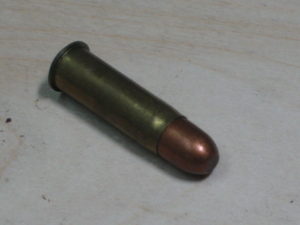
Inert ammunition (dummy rounds) must be used when studying and handling an educational cutaway firearm.
Norinco jw 15 educational rifle
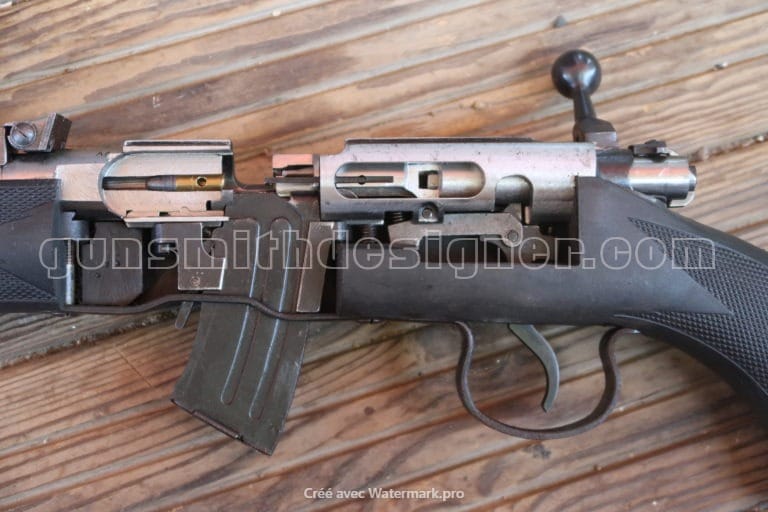
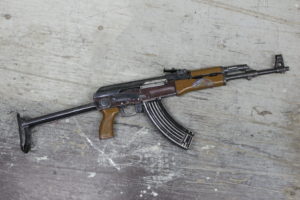
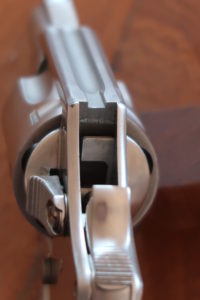
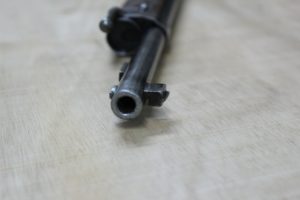
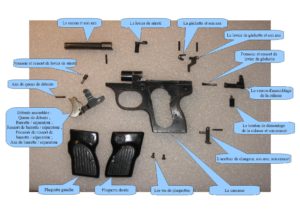
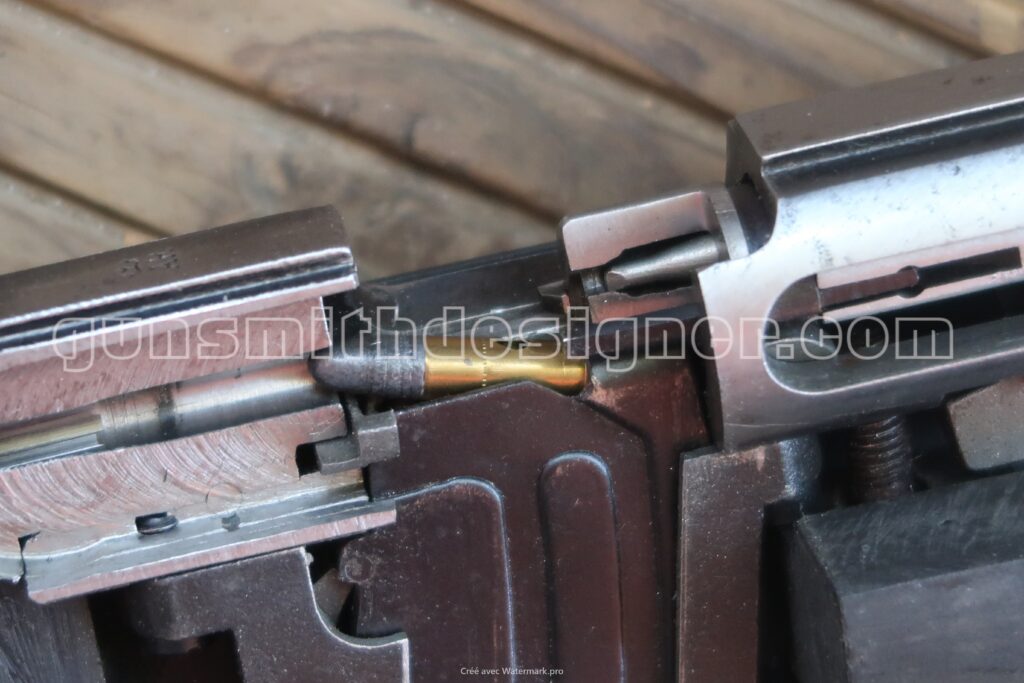
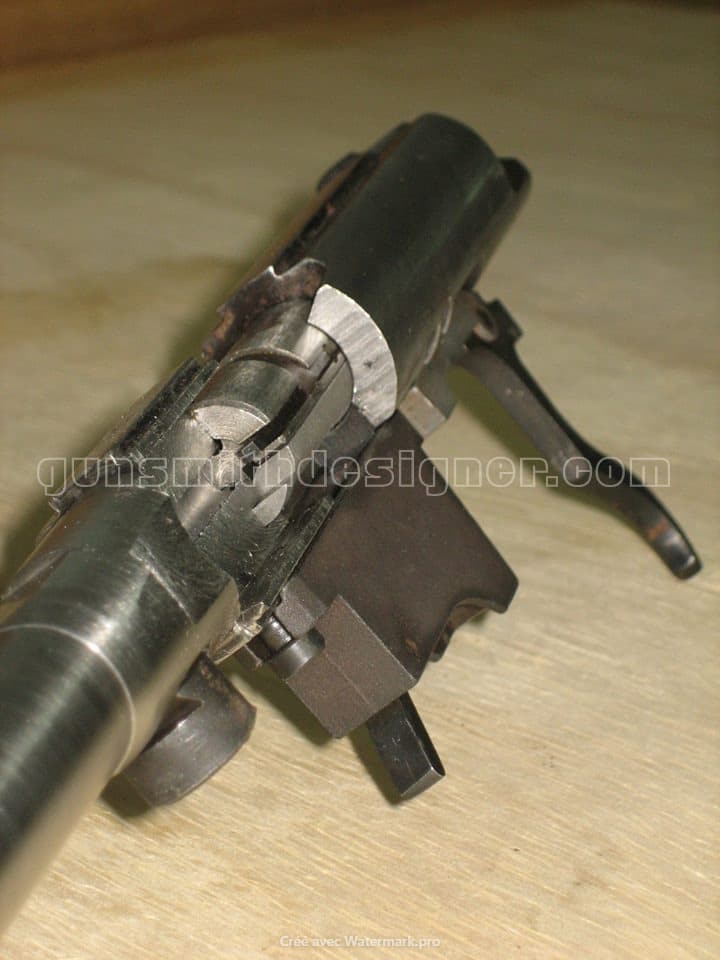
As an example, you will find attached a photo gallery of a Norinco jw 15 didactic rifle. You will be able to see certain interactions between the parts and in particular the position of the front face of the bolt with respect to the rear face of the barrel (something impossible to see on an uncut weapon when the bolt is closed).
What can be seen on our educational rifle Norinco jw 15 rifle ?
We will detail below the benefits that cuts can bring to a firearm including our rifle Norinco jw 15.
The photo gallery above allows to visualize for example :
- An uncut side :
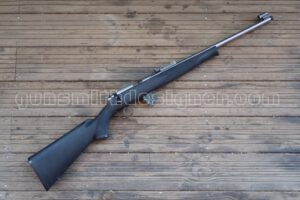
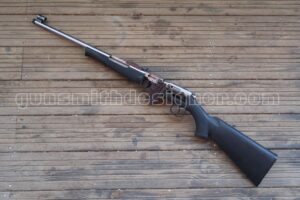
Utilizing the contrast between the right side of the firearm (uncut) and the left side (sectioned) adds a surprising dimension. One does not expect to discover a cutaway firearm when it is resting on a gun rack, showcasing what I would call its ‘commercial facade’ (generally the right side).
- Chamber and forcing cone condition :
Sectioning is the only way to visualize the actual condition of the chamber (possibly under a magnifying glass or a microscope). It is then possible to see its state at a given moment in the firearm’s lifespan (immediately after manufacturing, after 500, 1,000, 10,000… rounds fired, after torture tests, or after prolonged exposure to a harsh environment…).
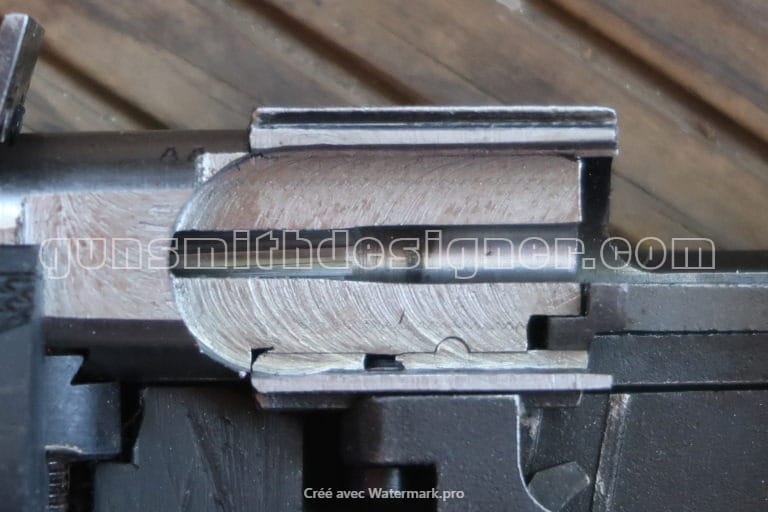
This is a destructive method since the firearm can no longer be used afterward, especially if the receiver and the barrel are machined (as is the case with our Norinco JW15 rifle). The two main components (the barrel and the receiver) are then rendered unusable for their original purpose.
While optical tools such as borescopes exist to inspect the inside of barrels and chambers, they do not always provide a clear view of defects. Some of these optical devices tend to magnify the defect(s), which skews the initial diagnosis by overemphasizing what should otherwise be minor flaws. On the other hand, borescopes remain indispensable tools as they offer a perspective that the human eye simply cannot achieve without sectioning.
- Cartridge positioning inside the chamber :
Sectioning the chamber allows you to see the exact positioning of the cartridge in its housing. One can then determine where the bullet sits relative to the forcing cone (throat) of the chamber, making it possible to see whether the chamber is properly suited to the ammunition and vice versa
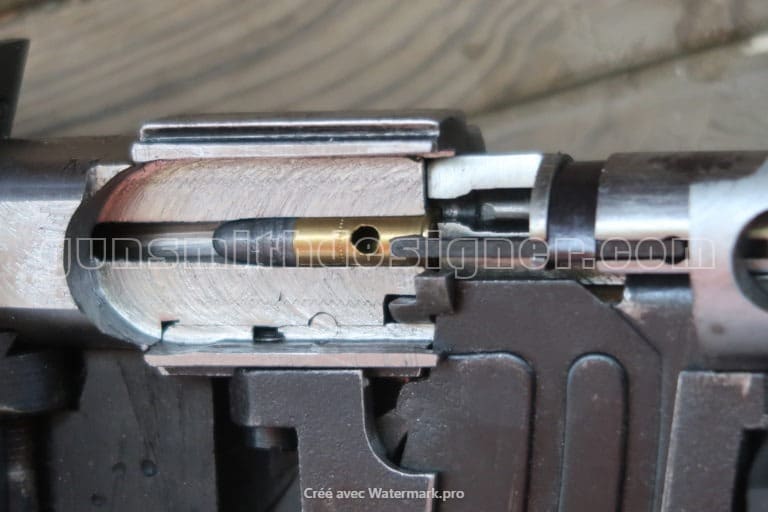
Depending on the ammunition used, premature wear can occur inside the chamber (e.g., using black powder ammunition or using 22 short ammunition in a 22 Lr chamber).
- Cartridge case head positioning in the bolt face cavity :
The cut can answer the questions below :
- Does the extractor properly grip the cartridge during extraction ?
- Where is the ejector located and how does it act on the spent cartridge case ?
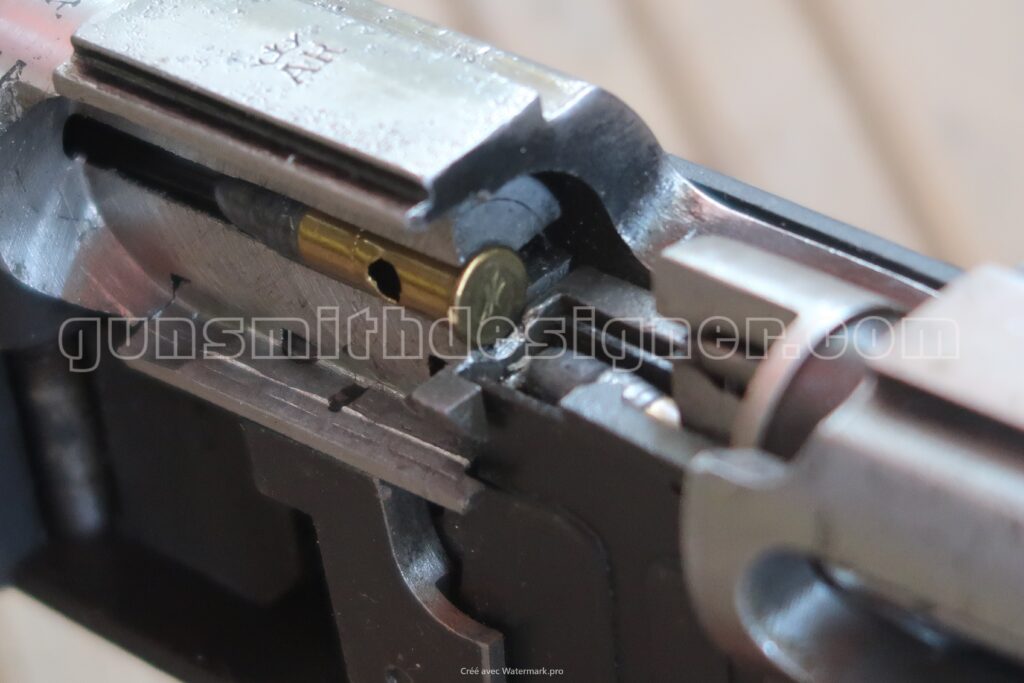
- Feeding :
While much less complex on a manual repeating firearm than on a semi-automatic or automatic weapon, feeding nevertheless remains a critical point. What is more frustrating than a firearm supposed to be a repeater that operates as a single-shot due to malfunctions. This requires proper interaction between the chamber, the feed ramp, the magazine, the magazine lips, the bolt, its extractor, and the cartridge to be chambered.
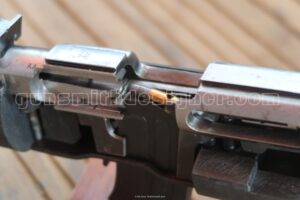
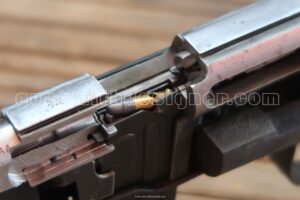
As seen in the attached photos, the feed ramp of the Norinco JW15 rifle is almost non-existent. The forward edge of the magazine well serves as a feed ramp. The chamfer at the bottom of the chamber mouth helps ensure smooth cartridge feeding. I believe the manufacturer could have made an effort to implement a better-designed feed ramp.
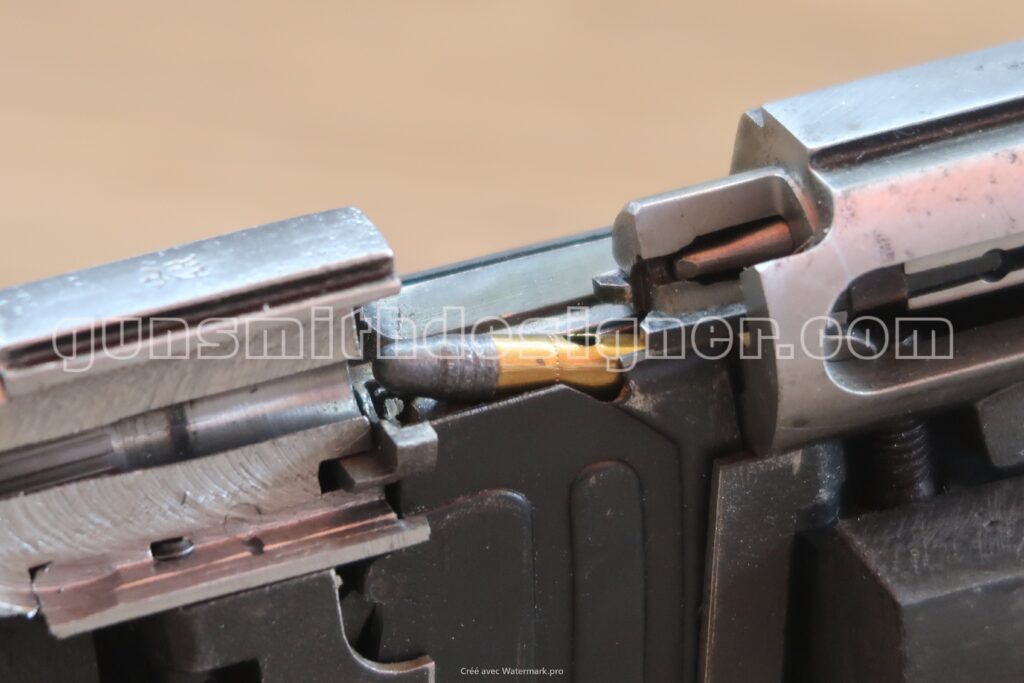
- How the barrel is mounted on the receiver :
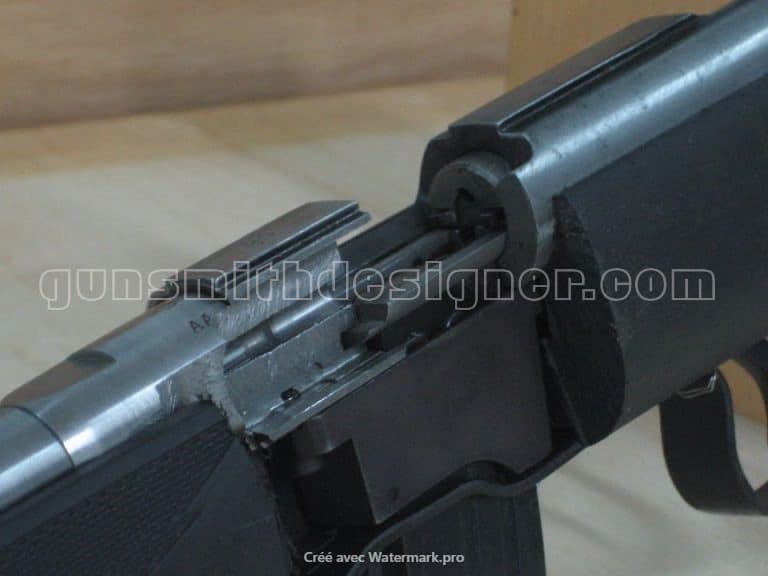
- Is it screwed in ?
- Is it press-fitted ?
- Is there a retention device to hold the barrel in place (pin, screw, adhesive) ?
- If so, where is this device located ?
- What is the diameter of the pin ?
- What is the screw diameter and thread pitch ?
- Is the barrel made in multiple parts ?
- Is it a single-piece barrel ?
- Does it form a single, intergral component with the receiver(very rare) ?
On the firearm under study, the barrel is press-fitted into the receiver and secured in place by a 2.5 mm pin.
- The bolt face relative to the breech end of the barrel :
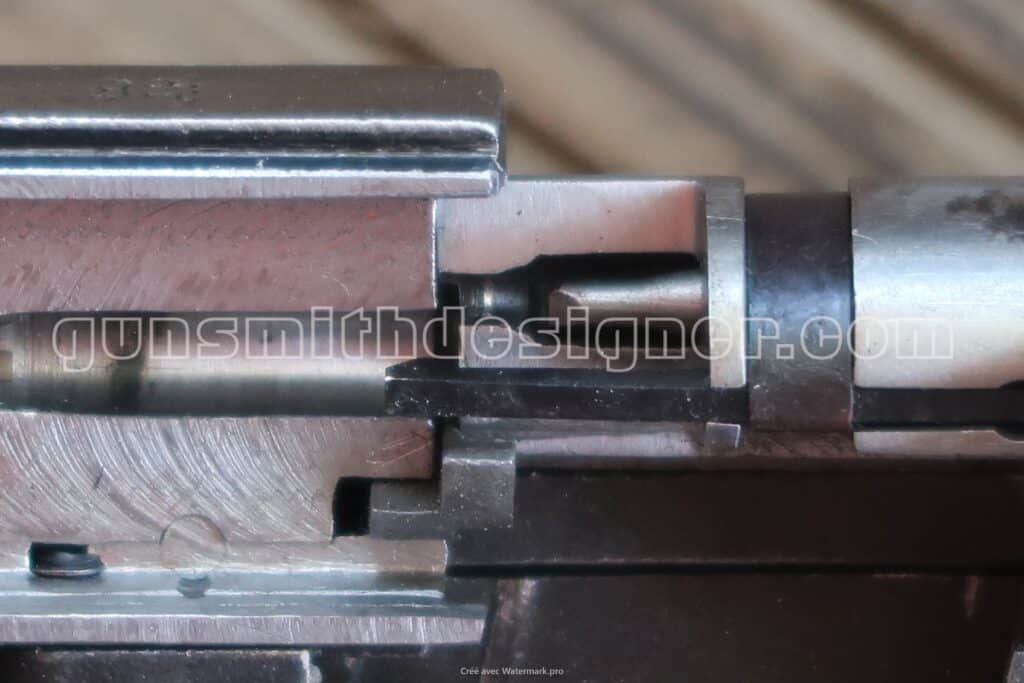
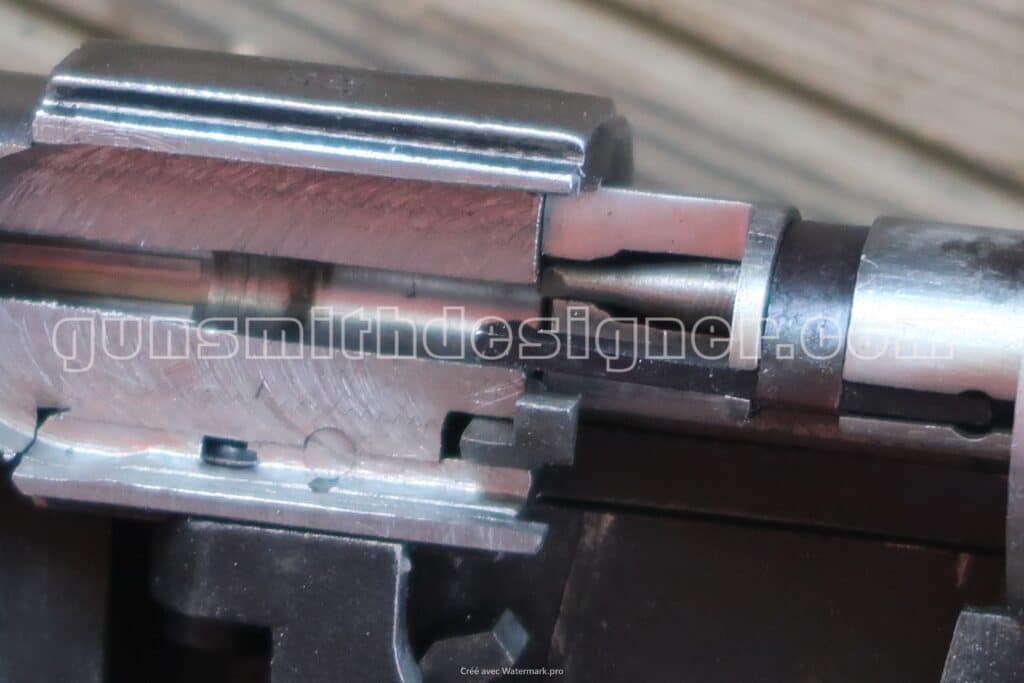
The relationship between the breech face (front face of the bolt) and the breech end of the barrel (rear face of the barrel) is interesting to study. The location of the firing pin channel, the clearance and travel of the firing pin relative to the rear of the barrel, and the headspace condition for rimmed firearms are all details that can be observed and quantified.
- Testing materials :
Having access to the core of a finished parts gives us the opportunity to test the hardness of materials.
Conclusion
Creating a cutaway firearm is a labor-intensive process requiring significant experience and precise machining to expose internal moving parts without over-milling. While these educational models generally cost more than operational firearms due to limited production runs, collecting them offers valuable technical insights and easier transferability amidst tightening regulations. For more details, visit Gunsmith Designer.