

Revolvers have been around for a very long time, since about 1830. I will not debate historical issues here, as this is not my field of expertise. Petty squabbles over minor details are common among amateurs and/or specialists, but in my eyes, these carry little importance. However, through two articles (the second being: Comparison: the 8mm 1892 / 7.65 Browning calibers), I would like to offer you some insights into firearms design and manufacturing, using the MAS Mle 1892 revolver as a case study.
You might ask me why the MAS Mle 1892 revolver is so special that it sparks a broader discussion on the small arms world in general, and on firearms design and gunsmithing in particular. After detailing the strengths of the Mle 1892 revolver, I will attempt to place it within the context that gave it its reputation as an outdated weapon: the First World War. Is the Mle 1892 revolver really that ancient?
The MAS mle 1892 revolver
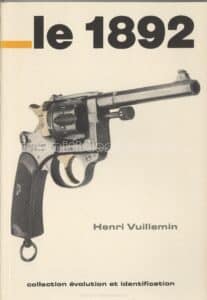
First and foremost, I would like to pay tribute to Mr. Henri Vuillemin, author (and thus one of my peers) of the book Le 1892, published by FG éditions/Crépin-Leblond, which I partly relied upon to write this article.
The strengths of the revolver mle 1892
When comparing this weapon with its competitors of the time, the Mle 1892 revolver was at the cutting edge in many areas. What can be credited to its success :
The unloaded weight of the weapon is 840 grams. This makes the Mle 1892 revolver a sleek firearm, pleasant to carry. It is a very elegant and lightweight weapon, contrasting sharply with the bulky Reichsrevolver or the Smith & Wesson in .44 Russian. It is much less exhausting to handle.
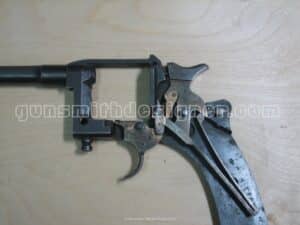
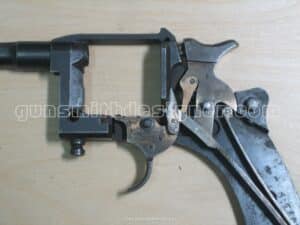
The rebounding hammer prevents the firing pin from piercing and sticking into the primer. This might bring a smile today, as a hammer that retracts when the shooter releases the trigger is taken for granted on modern revolvers, but at the time, it was innovative. Without this design, once the firing pin is jammed into the primer, the cylinder is blocked from rotating and the trigger becomes inoperable. This can damage the firing pin and, above all, wastes precious time for the soldier, who will first be caught off guard and then have to scramble to fix the issue. Needless to say, on a battlefield, one has better things to do than clearing this type of malfunction.
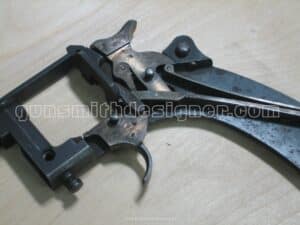
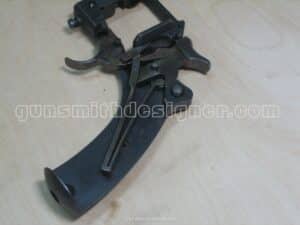
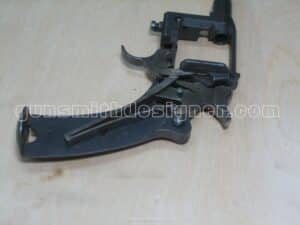
Double-action is widespread today, even to the point where some firearms are double-action-only. Being able to fire without having to manually cock the hammer can, in certain circumstances, provide an advantage over an opponent whose weapons function only in single-action. In addition to the time required to cock the hammer, the shooter must alter their grip and shift away from their shooting position to do so. Double-action was a recent development at the time, and not all of the Mle 1892 revolver’s competitors were equipped with it.
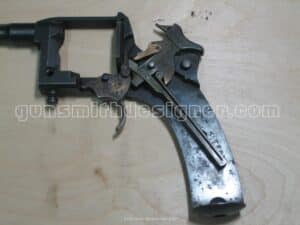
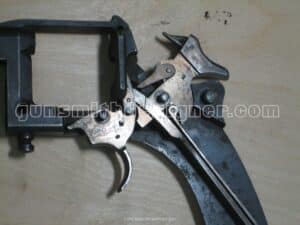
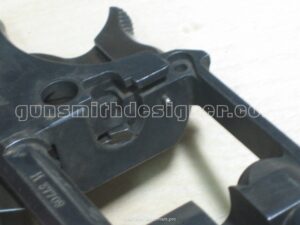
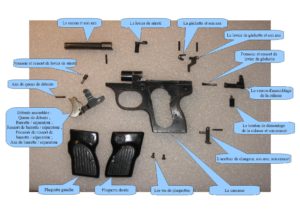
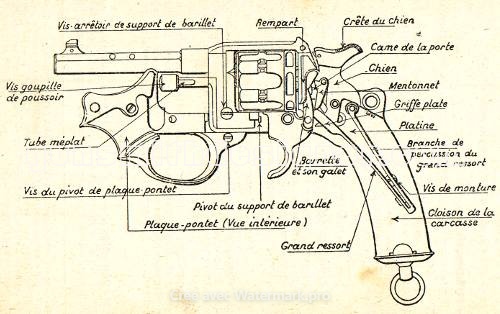
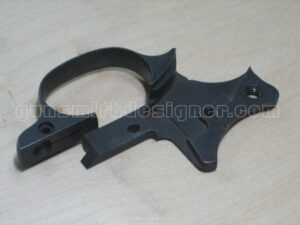
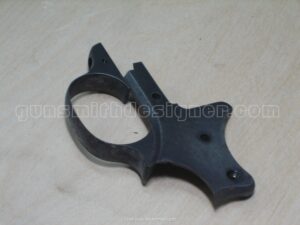
Easy to disassemble, the Mle 1892 revolver’s firing mechanism can be completely stripped, cleaned, and oiled by the operator. The soldier is the frontline diagnostician for current or future malfunctions and wear. At the slightest defect found, the soldier must report to the higher maintenance tier and have the weapon inspected by qualified personnel. For this reason, it is imperative that every soldier cleans their weapon and, on that occasion, inspects every part and reports anything that seems unusual. In this regard, the Mle 1892 revolver is well-designed: simply loosening the screw at the top of the grip (right side) allows the trigger guard plate to swing open, granting full access to the entire firing mechanism.
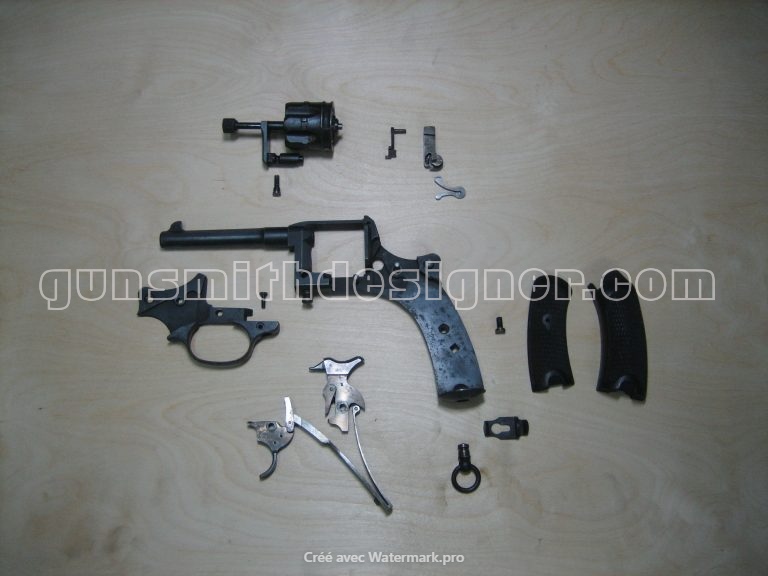
The mechanism
Cost-cutting was not a priority for this weapon. All the parts feature complex shapes, yet they are all flawlessly executed. One must visualize the industrial world of that era. CNC milling machines, lathes, or slotting machines obviously did not exist. All machining was done on conventional (manual) machines, likely using numerous form cutters or specific fixtures dedicated solely to manufacturing this precise firearm. To this, a series of inspectors must be added to verify whether the parts fell within the specified tolerances.
Launching the manufacturing run of tens or hundreds of thousands of parts carries extremely heavy implications. Under these conditions, it is no easy task to turn back and embark on a new program as if nothing had happened.
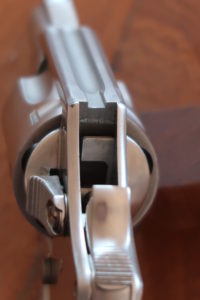
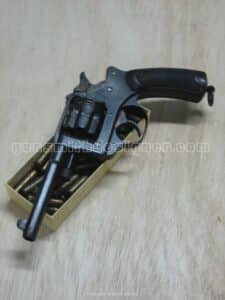
One hundred and six years after leaving the factory, the weapon photographed here is fully functional and in excellent condition. Finishing must have been a major part of the manufacturing process. The fit of the parts is perfect: none of them bear any machining marks, no burrs are present, and the edges of the components remain sharp. This was not a rushed deburring job, but meticulous craftsmanship. The bluing is still present, though slightly faded in some areas. A patina that certainly has its charm.
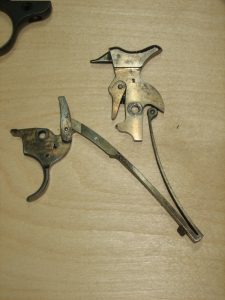
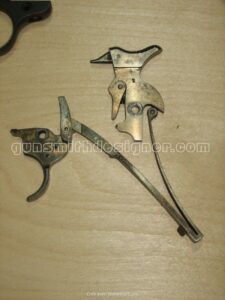
Four parts are to be disassembled: the hammer spring, the hand, the hammer, and the trigger. The firing mechanism consists entirely of these four components. There is no difficulty in separating them from the frame of the weapon. The parts are robust (hence not fragile) and very well finished.
The hammer is made of steel. It is polished and features a beautiful straw-yellow finish. The hammer spur is bulkier than the body and is checkered.
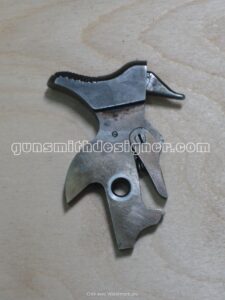
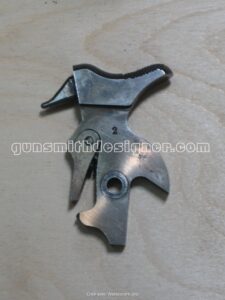
The hammer strut enables double-action operation. It is held in place by a screw that acts as an axis, and its movement is driven by a helical spring.
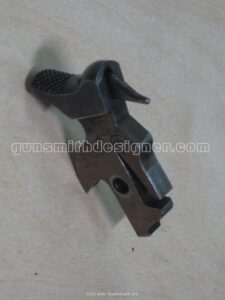
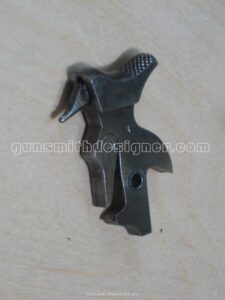
The firing pin pivots around an axis. There is no return spring.
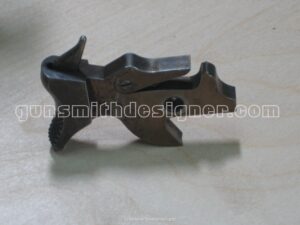
The hammer spring is made of steel. It consists of three parts: the spring itself, a roller, and the roller axis. A metal lug, integrated into the spring, fits into the frame to hold it in place.
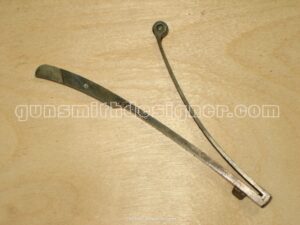
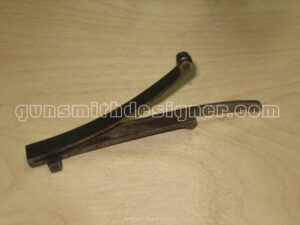
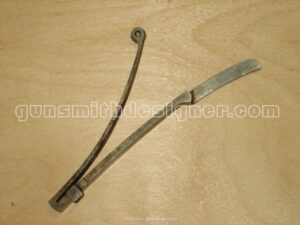
The roller is in contact with the hammer through a V-shaped notch located on the hammer.
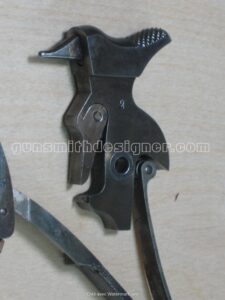
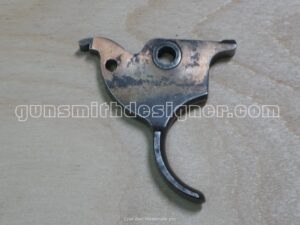
The trigger is made of steel. The hand is carried by the trigger.
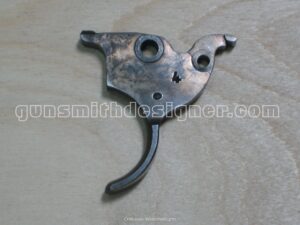
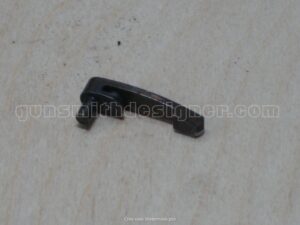
Machined from solid steel, the cylinder stop and the cylinder bolt lock the cylinder at a specific moment in its rotation.
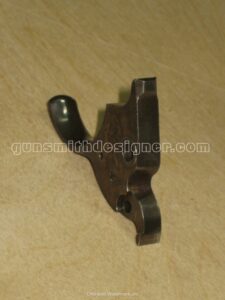
The hand is driven by one of the leaves of the hammer spring, which forces it forward. It is the hand that rotates the cylinder.
The frame is made of steel. It is a monobloc design. It is onto this master component that all other elements are mounted.
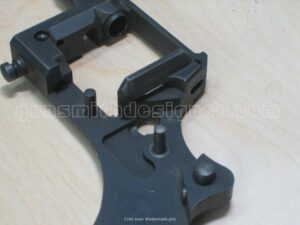
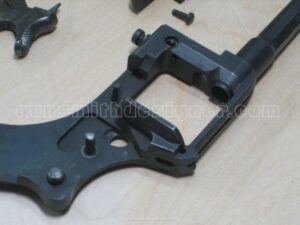
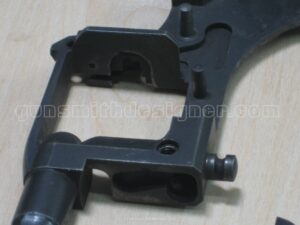
It is a sleek and complex component that requires a significant number of machining operations.
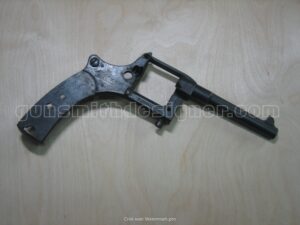
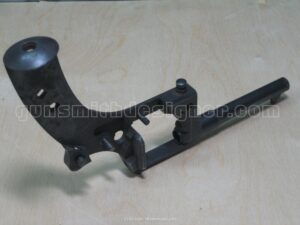
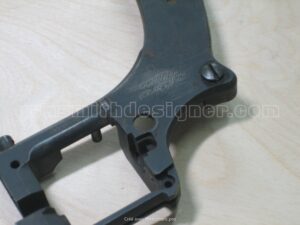
The barrel is screwed into it. There is no barrel retaining pin.
The sideplate is made of steel. It is a monobloc design. It mounts to the front of the frame and pivots around its attachment point.
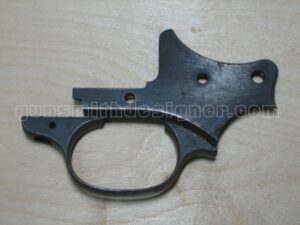
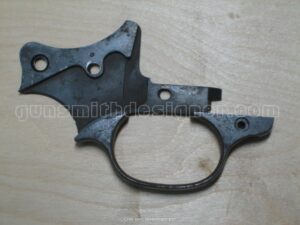
It grants access to the mechanism after unscrewing a dedicated screw.
The cylinder is made of steel. It has six chambers. It swings out to the right side of the weapon after opening the loading gate. A spring carried by the frame indexes the position of the cylinder.
It is secured to the frame by a small transverse screw.
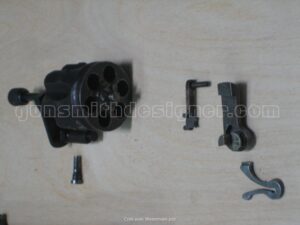
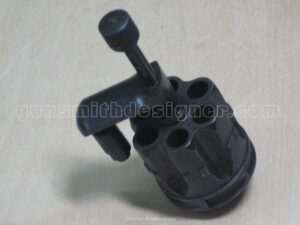
The simultaneous extraction of all six cartridges is achieved by pushing the rod at the front of the cylinder. To disassemble the cylinder, the screw located on the large sleeve at the front of the ejector rod must be removed.
The markings
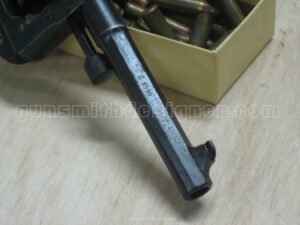
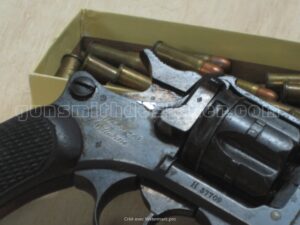
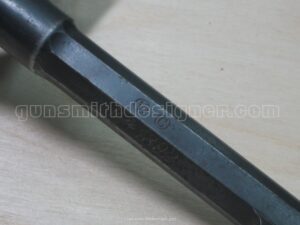
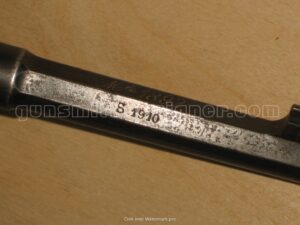
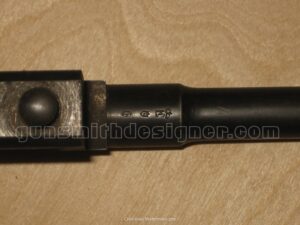
As the icing on the cake of this sleek design, a beautifully executed engraving on the right side of the frame indicates which arsenal the weapon came from: the Manufacture d’Armes de St Étienne. It is reminiscent of the engraving found on the spine of the blade of French regulation Mle 1822 swords.
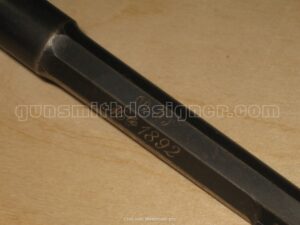
The ammunition
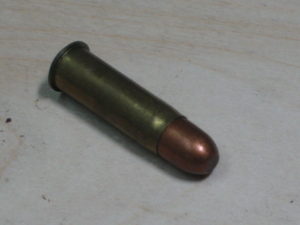
The choice of caliber was bold for the time, yet uninspired since it was loaded with black powder. Its stopping power is said to be too weak compared to the British .455, the German 11mm, or the .44 Russian. War is not a static ground where an enemy would calmly wait to die from a projectile intended for them, fired just as calmly by a second soldier who is likewise unfazed by the fear of death. Obviously not!!! Hence the necessity of having a projectile with sufficient stopping power to deliver an immediate shock, instantly halting the threat posed by an enemy fueled by adrenaline.
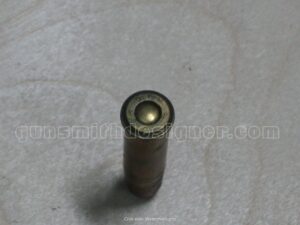
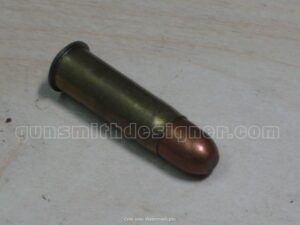
The use of a heavy, large-diameter projectile traveling at high velocity that transfers all its energy upon impact is more effective than a lightweight, low-velocity projectile. The 8mm caliber chosen for the revolver studied here featured a muzzle velocity of 215 meters per second. This is not even the speed of a .22 Long Rifle, though with a heavier bullet weight: 7.8 grams compared to 2.59 grams for the .22 LR.
I believe the choice of this caliber stems from a desire to conserve raw materials, thereby producing more ammunition with the same amount of resources. For the same weight, a soldier could carry more ammunition. At the time, downsizing firearm calibers was highly fashionable. It was an innovative choice, but one that would have benefited from a higher muzzle velocity.
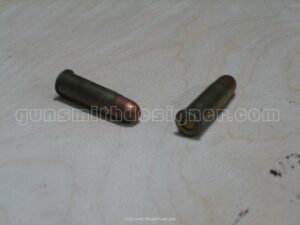
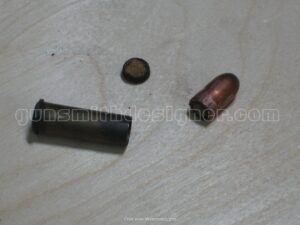
The downsizing of the projectile (meaning the reduction of both its diameter and weight) would be widely embraced many years later by firms like HK and FN Herstal. They achieve significant armor penetration with 5.7mm diameter calibers for FN Herstal (bullet weight: 2 grams for a velocity between 650 and 750 m/s) or 4.6mm for HK (bullet weight: 1.7 to 2 grams, for a velocity close to 700 m/s)… with greater energy than a 9mm… But that is another topic.
The mle 1892 revolver and the first world war
Why do we read everywhere that the Mle 1892 revolver was quickly outdated? Is it true?
It is astonishing to see that this weapon became obsolete so quickly, despite the innovative strengths we noted above. The emergence on the market of reliable semi-automatic pistols chambered in calibers close to 8mm—yet smaller than the 11mm regulation calibers common in many countries at the end of the 19th century—dramatically transformed the handgun market. Among these intermediate-caliber handguns, we can mention: the C96 in 7.63 Mauser, the Colt 1900 in .38 ACP, the Colt 1903 in .32 ACP, and the P08 in 9mm Parabellum… It is fascinating to observe how a semi-automatic pistol can bridge the future and the past. In 1911, the Colt 1911 was adopted; it retained a large-diameter ammunition: the .45 ACP (11.43mm). It would span the 20th century to reach us virtually unchanged, and this weapon, along with its derivatives, remains highly popular and widely sold today.
The late 19th and early 20th centuries were periods of incredibly rapid change. Profound mutations in society and industry took place during these times. The defeat of 1870, through its stark display of unreadiness, left behind a fierce determination not to lag too far behind other European nations.
While the Mle 1892 revolver was outdated due to the ammunition it used, it retained the advantage of its double-action system, as no semi-automatic pistol of that era operated in double-action. To achieve the firing speed of a revolver with a pistol, it was therefore necessary to keep the hammer cocked with a round in the chamber. It is also important to understand that no semi-automatic pistol of the time was equipped with a firing pin safety. If we couple this with the fact that the steels used for Ruby pistols were of low quality, accidents must have been frequent.
While the reloading time of a revolver is much longer than that of a semi-automatic pistol, the revolver itself is more reliable in extreme conditions. A revolver does not jam, and it is not—or at least less—susceptible to external dirt and fouling.
Furthermore, it must be remembered that the Mle 1892 revolver’s mechanism can be completely disassembled by the operator, which is not the case for many other weapons. Just try taking apart the trigger and firing mechanisms of a Ruby pistol! Fast reloading is only advantageous if the operator has a substantial number of magazines; however, not all Ruby pistol magazines were interchangeable, which must have led to significant issues.
According to Henri Vuillemin in his book : Le 1892, it appears that an undetermined quantity of Mle 1892 revolvers were supplied to the Wehrmacht during the brutal Russian winters of 1942, 1943, and 1944, as the harsh weather conditions rendered pistols inoperable or unreliable. While the 1892 revolver were deemed outdated in 1944, they were still being used thirty years later under the most grueling conditions.
Faced with trench warfare, which became the new norm as early as December 1914, the army general staff supplemented the use of the Mle 1892 revolver with semi-automatic pistols from various sources, but primarily from Spain. Their manufacturing quality was far inferior to that of the Mle 1892 revolver. However, this confirmed the fact that the revolver was no longer up to date (at least at that time and in that specific context). A fast reloading method and a weapon shorter than a rifle were required to take and ‘clear’ a trench.
Conclusion
In my opinion, the main issue with the Mle 1892 revolver is its loading system. It no longer fits the context of that era. However, this does not mean it should be left to gather dust on the rack; if you place it in the right context, it fully regains its value, even today.
So the question arises : why did France not choose a semi-automatic pistol? It was too early in 1892, and not a priority in 1914. The latter was given to weapons capable of repelling assaults and breaking enemy lines: machine guns and artillery.
How could anyone know that the conflict would take on new, unknown forms to become a trench war? How to predict the future? How to maintain an industrial infrastructure that is underutilized in peacetime so that, if necessary, this industry can be placed at the disposal of weapons engineers to ensure greater responsiveness in times of crisis? These questions are complex. The bare minimum would be a permanent technology watch, recurring tests on new equipment, continuous tracking of these systems, and evaluating their evolution with interest in order to reorganize rapidly if necessary—thereby maintaining the sovereignty of the French people and the continuity of the state. A legitimate state that equips its soldiers with reliable and suitable gear so that they may protect it.
The desire for revenge following the defeat of 1870, the obsolescence of the arsenal, the lack of preparation, the rapid evolution of technology, the resistance to change, the colossal sums required to maintain or upgrade equipment, personnel training, the reconstruction of the country… all of these factors led to a war begun in red trousers, massive foreign weapons purchases, and ultimately, a staggering toll of trauma among brotherly and neighboring peoples. France, a vanguard nation in 1914, lost its status to younger, less impacted nations. Who benefits from the crime?
The moral of the story: one should not play the warmonger, bringing misery upon one’s people, if one is not prepared… especially when playing on home turf.