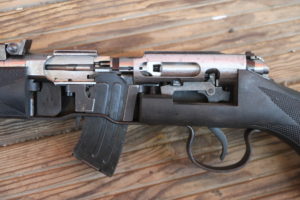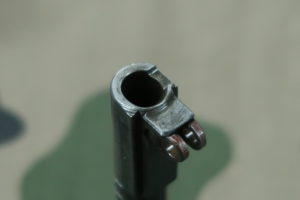


Through the transcription of an article tinged with a hint of optimism published in 1869, we saw the early adoption of the new standard-issue French rifle: the Chassepot Model 1866.
A weapon firing so many cartridges that the enemy would be quickly torn to pieces in the event of a conflict,’ according to the pre-war article (referring to the war of 1870).
The first article is available here : The rifle mle 1866 Chassepot 1/2
What is the situation in 1873 ? What can be deduced throught the study of more recent texts ? Is there à connection with more contemporary events ?
The adoption of the Chassepot Mle 1866 rifle
In 1865, while the permanent commission of Versailles had chosen a muzzle-loading rifle to replace the standart-issue rifle, Emperor Napoleon III expressed the wish to adopt a breech-loading rifle. Indeed, Prussia’s recent victories forced a more modern choice. This state had adopted a breech-loading rifle decades earlier (1840) : the Dreyse rifle.
Under Swiss influence, the trend of the area learned toward a reduction in caliber. The goal was a weapon with a coliber between 10 and 15 mm in order to achieve a flatter trajectory and allow firing at greater distances, which was less feasible with a 17 or 18 mm projctile. The aim was thus to heavily impact, or even defeat, the ennemy before hand-to-hand combat.
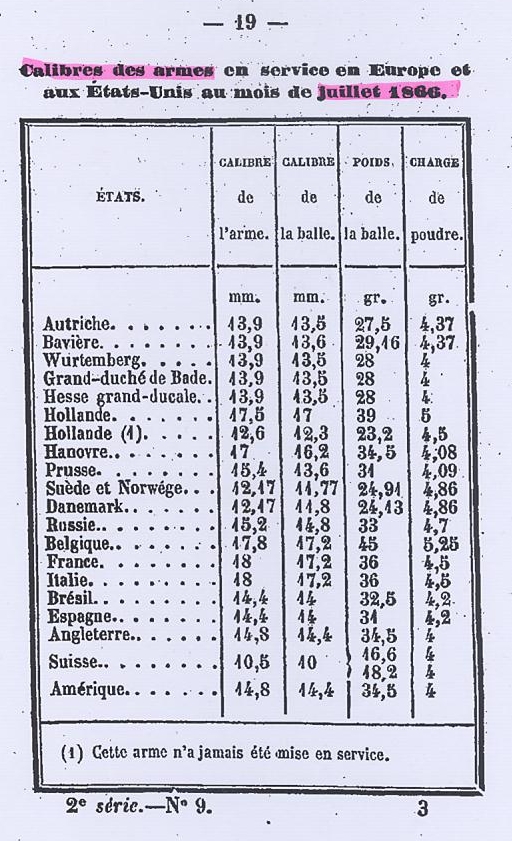
It is a period of rapid technical developments, and many directions exist. However, selection tests are carried out using a rifle that is retrograde but still deeply rooted in people’s minds: the percussion rifle. The latter ultimately represents a benchmark of old weaponry and an old way of waging war. On the other hand, no metallic cartridge weapon is present in the ranks; it is too early for France.
Ultimately, the commission is tasked with ruling on three weapons: the Chassepot rifle, the Chassepot rifle modified by Mr. Plumerel, and a muzzle-loading rifle. The Chassepot rifle was adopted.
The creator of the Mle 1866 rifle is the author of three patents: the rubber obturator, the bolt action mechanism derived from the Prussian Dreyse, and the cartridge. The ballistic characteristics of the barrel and the bullet (bullet length/caliber, bullet weight/powder charge, shape and pitch of the rifling/influence of the projectile’s rotation) were defined based on studies by various contributors and commissions, and then applied to the Chassepot mechanism.
On February 14, 1866, an order for 1,500 weapons was placed with the Châtellerault manufacture.
In June 1866, 400 rifles were received. They would be sent to the Châlons camp to be tested by the Imperial Guard (see the first article on the Chassepot rifle).
The Mle 1866 rifle is a resolutely modern weapon for its time. Terribly well-made, it demanded a significant effort from the nation. Then comes the time for the first trials, followed by the trial by fire. The single criterion of the individual firearm is not enough to predict the victor of upcoming battles.
Has the idyllic framework described by the first article evolved? What about the best weapon in Europe? Are Mr. Chassepot’s patents adapted to a weapon of war quickly built before a major conflict? Or to a target rifle? Will the time between the delivery of the rifles and the start of the war be sufficient to remedy the various technical problems ?
The Weapon’s Defects
Gas blowback toward the shooter’s face (synonymous with a lack of gas seal) was the reason for the delayed adoption and proliferation of breech-loading weapons. Mr. Chassepot used a material that was recent for the era—a rubber washer—to achieve this seal, which, as a side benefit, reduced the weapon’s recoil. The part deteriorated in various ways: it cracked, melted and blocked the needle channel, or lost its elasticity. The blowback increased progressively as the washer lost its diameter while melting. The soldier carried a replacement part in his cartridge pouch. The use of this material was a bold choice; to this day, very few firearms have used rubber for this function, and the Chassepot may be the only one.
As seen above, the seal was more or less effective toward the outside. The same applied to the inside. Gases resulting from powder combustion travel anywhere they encounter no resistance. Consequently, they blew back into the bolt through the firing pin needle channel. This resulted in annealing (softening) the striker spring, leading to weak strikes or even spring breakage. In some cases, it was possible to cock the hammer (the striker) by slamming the buttplate on the ground. Combustion gases also heavily fouled the inside of the bolt.
Fouling did not only affect the inside of the bolt, but the chamber as well. Debris and shooting residue remained inside, preventing the chambering of subsequent rounds.
The needle’s diameter was 1.5 mm. Doubling the diameter to 3 mm would provide four times the strength, according to a study from that era.
Forcefully closing the bolt could cause an accidental discharge of a cartridge. This slamming action occurred due to the absence of a locking cam/inclined closing ramp on the receiver. The presence of this machining helps the shooter progressively push the ammunition into the chamber while locking the bolt. The vast majority of modern bolt-action weapons feature this ramp, providing unparalleled smoothness.
The weapon’s polished white finish, besides being highly visible from afar, required significant maintenance to prevent corrosion.
Despite the speech by Mr. Thiers, President of the Republic, on June 8, 1872 :
“In the opinion of military men, the Chassepot rifle was the best weapon in use among armies. The Chassepot rifle is recognized as excellent, except for its cartridge, which every European country is seeking to improve…”
While it is necessary to keep in mind the industrial context of the era, as well as the speed with which the weapon was manufactured and distributed, it still seems that several criticisms can be leveled against the Chassepot rifle’s design, contrary to the previous article.
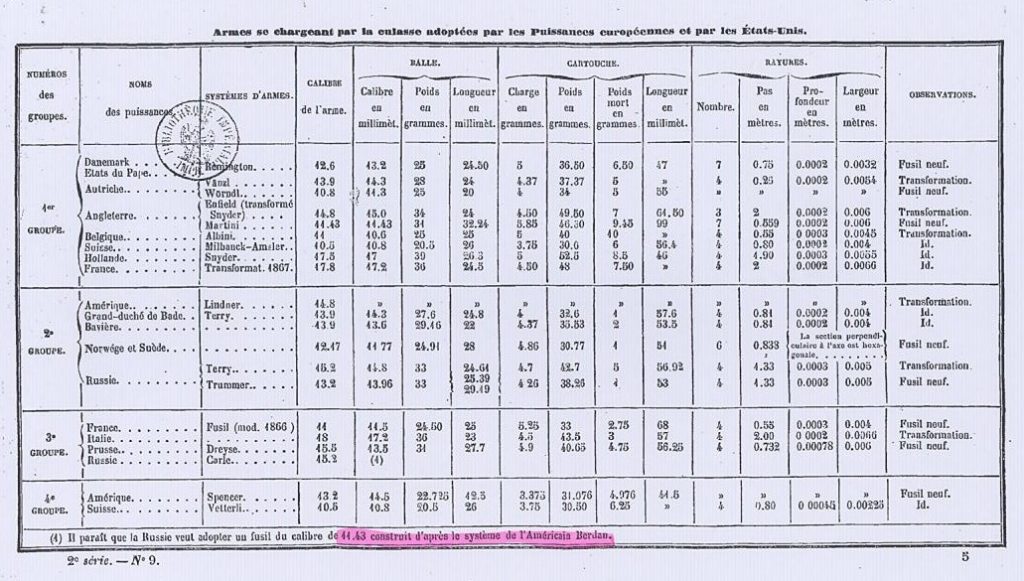
The Chassepot Rifle Cartridge
As previously stated, three principles competed during this period of small arms history: muzzle-loading, paper (combustible) cartridge, and metallic cartridge. Although proposed by the Versailles commission, muzzle-loading was deemed obsolete, swept away by the consequences of the Battle of Sadowa.
The combustible cartridge thus found itself in competition with the metallic cartridge. Although certain observers of the era preferred the latter, which were said to be of better quality even when sourced from abroad, its drawbacks received a larger platform. The flaws of the metallic cartridge at the time were :
-
The extra weight of the case. The weight of the casing added to that of the bullet reduces the number of cartridges a soldier can carry ;
- The chemical reaction between the case and the powder, which can lead to the early decomposition of the gunpowder ;
- Difficult extraction ;
- Cases that are prone to splitting ;
- The requirement of an extractor. A delicate and therefore fragile part, not easily replaced by the soldier on the battlefield ;
- The cartridge cannot be reloaded or manufactured by the soldier ;
- The tooling required for mass production is deemed too expensive ;
- Dimensional variations in the cases due to different manufacturers ;
- The ammunition’s lack of power ;
- Chambering difficulties if the case is dented or damaged ;
- The manufacturing cost of the case.
In 1866, no metallic cartridge weapon was in competition with the Chassepot.
n 1873, the choice between modernity (metallic cartridge) and semi-modernity (combustible cartridge) had not yet been made. Public finances and past military principles led some to argue that the paper cartridge remained the future. The choice would finally be settled in 1874. This was probably the time needed to perfect the metallic case and to overcome a certain resistance to change.
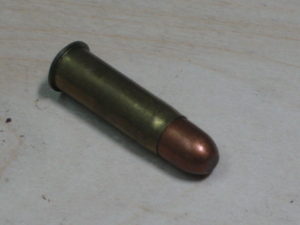
The standard-issue Chassepot cartridge
The specifications of the standard-issue cartridge are :
- Powder charge: 5.25 grams ;
- Bullet weight: 24.5 grams ;
- A bullet lenght of 25 mm (should be closer to 33 mm for greater accuracy, 3 times the diameter) ;
- Bullet diameter : 11 mm.
According to the 1873 manual on cartridges for military weapons, and notably for the Chassepot rifle, the 5 qualities of a military firearm cartridge should be :
- 1 Cartridge preservation / shelf life ;
- 2 Consistency, speed, safety, and shooting accuracy ;
- 3 The structural strength of the cartridge ;
- 4 Ease of manufacturing ;
- 5 Cost-effectiveness / low production cost.
1. Cartridge Preservation / Shelf Life
It is somewhat difficult to imagine good, long-term preservation for paper cartridges loaded with black powder. Furthermore, what kind of preservation are we talking about? The storage of components before assembly, the preservation of the manufactured ammunition, preservation during shipping, storage in ammunition bunkers, preservation during operational transport, or storage in the soldiers’ cartridge pouches… Any of these handling steps, if poorly executed, can cause damage. Combustible cartridge ammunition is fragile; it must be protected from harsh weather conditions—which is no easy task in times of war. The Chassepot cartridge is not ideal in this regard.
2. Consistency
This quality stems from the homogeneity of a batch of cartridges. It therefore depends on numerous criteria such as preservation, the consistency of components, and manufacturing quality… which means the parameters to control are significant, especially if part of the production is outsourced to civilian workshops. To this must be added the irregular deposits left by shooting residue and the paper casing in the chamber, which compromise consistency.
3. Promptness
The rate of fire of the Chassepot rifle is a real advantage compared to a muzzle-loading weapon, even more so because it allows reloading while crouching or lying down. This speed is only possible if the firearm’s chamber is not overly fouled, or if the bullet has not separated from the case inside the soldier’s cartridge pouch… among other issues
3a. Safety
It stands to reason that the Chassepot cartridge does not offer full safety guarantees. The reason has already been mentioned above: there can be no safety when firing caseless ammunition if the breech-loading mechanism is not gas-tight.
3b. Shooting Accuracy
Some of the criteria for shooting accuracy include the centering of the bullet on the barrel’s axis, the consistency of the bullet’s velocity, barrel wear and cleanliness, as well as the uniformity of the bullet’s weight and diameter.
Aligning the axis of the bullet with the axis of the barrel when the chamber is subject to fouling can seem complicated. Likewise, even in a chamber free of residue, there is always some play between the forcing cone (throat) and the bullet, causing a misalignment. This play can be reduced (but not eliminated) by using multiple layers of paper around the bullet, which will always result in compression and therefore irregularity.
Depending on the condition of the bolt’s rubber washer, gas leaks can occur, altering internal pressure and consequently the bullet’s velocity. This impacts the projectile’s trajectory flatness and, as a result, shooting accuracy. Firing residue inside the barrel’s rifling will have the same impact.
4. The Structural Strength of the Cartridge
The structural strength of the Chassepot cartridge was highly inadequate for a military round. It is estimated that 20 percent of the ammunition was damaged during the 1870–1871 conflict, sometimes destroyed directly inside the soldiers’ cartridge pouches during troop movements. Historical accounts describe soldiers fleeing the enemy due to a lack of cartridges, caused by supply failures that failed to arrive… even with the use of the railway.
5. Ease of Manufacturing
By adopting the paper-cased cartridge, decision-makers wanted to allow soldiers the possibility of assembling their own ammunition. In the event of capturing an enemy convoy or camp, fighters could then make use of the powder and primer stocks left behind by the adversary.
However, as ammunition became more complex, it was no longer as easy for soldiers to manufacture it themselves in a war that was becoming increasingly mobile. Instead, reliance shifted toward railways to transport supplies. This marked the beginning of “industrial operational support.” On the other hand, it was easy to set up manufacturing workshops with trained workers and simple tooling. It appears that poor-quality ammunition was delivered by civilian workshops during the 1870–1871 conflict. One worker could manufacture 85 cartridges per ten-hour shift.
Following changes in military practices and the increased range of weapons, ammunition consumption skyrocketed. This was likely one of the primary reasons for the supply shortages.
6. Cost-Effectiveness
In 1873, a military law programs 1,200,000 men under the flag. At a rate of 100 cartridges per staff per year, an annual requirement of 120,000,000 cartridges are required under penalty of insufficient instruction. It is easy to imagine that each component needs to be optimized in order to reduce the cost as much as possible and thus reduce the bill. In view of the annual need for cartridges, the smallest savings passed on each munition represents very quickly large sums. The paper case cartridge remains more economical than the metal case cartridge.
Can we truly say, however, that 100 cartridges a year are enough to train a marksman and maintain a soldier’s skills? This highlights the value of encouraging private initiatives, such as establishing civilian shooting ranges, founding hunting societies, teaching children marksmanship in schools, and offering civilians firearms that closely resembled standard-issue weapons so they could practice year-round without impacting state resources. Traces of these initiatives can readily be found in old manufacturer catalogs.
Many of the criteria listed above were not met; yet, the paper cartridge was accepted.
The Callebaut cartridge
“The Chassepot rifle is recognized as excellent, except for its cartridge, which every European country is seeking to improve.” (Speech by the President of the Republic, June 8, 1872)
Driven by a desire to equip the Chassepot rifle with a more suitable ammunition, the Callebaut firm (Paris) proposed a wooden-bodied cartridge. This new round, devoid of a metallic case, was known as a “chased cartridge” (étui chassé).
This combustible-cased variant enabled faster shooting, delivering 150 rounds compared to only 101 rounds fired with the standard-issue ammunition. It recorded a single misfire out of 1,089 rounds fired. Furthermore, 207 rounds were fired without any incidents related to the rubber sealing system, compared to 85 in the standard-issue rifle. This improvement was due to the use of a rubber membrane sealing the cartridge tube, which expanded in diameter under gas pressure, thereby reducing stress on the bolt’s rubber obturator.
Upon firing, the 13.5 mm diameter wooden tube was forced into the forcing cone (throat), breaking it apart. The pieces of wood exiting the barrel effectively cleaned it. No wood particles remained in the chamber.
The cartridge’s wooden body was more durable than that of the standard-issue round. According to the manufacturer, even if it were half-crushed, the ammunition would still function. If it still functions… it must have been difficult to chamber.
200 cartridges could be manufactured in ten hours, which is 2.35 times more than standard-issue ammunition. Time was not the only thing saved; wasted or defective ammunition was reduced as well.
This cartridge does not appear to have been adopted by the military. The following year, the Gras rifle would put an end to the paper-cased cartridge; the era of the metallic case had arrived.
I have not found any illustration or depiction of this ammunition.
Conclusion
Through these two articles, one can ultimately see the gap between textbook transcriptions and the reality of war—between theory and practice.
Pressed by Prussian victories, notably the one on July 3, 1866, at Sadowa, France hastily decided to equip its army. It chose a weapon that was modern for its time: the Chassepot Mle 1866 rifle. It used this opportunity to establish new state manufactures. The choice made by France was bold. Modern engineers have not clearly resolved, and thus seldom commercialized, this type of firearm. Indeed, the use of combustible casings is bound to encounter issues that remain difficult to solve even today—most notably, chamber fouling and gas sealing. It was ambitious in 1865–1866 to attempt to replace a standard-issue percussion rifle with a weapon combining several technical advancements, hoping to solve major hurdles all at once (the use of a gas-tight breech-loading mechanism, caliber reduction, fouling caused by black powder, fouling from burnt paper residues, changes in infantry rifle doctrine, the adoption and mass production of a new ammunition, and the use of an uncommon material in gunsmithing at the time: rubber, etc.), all while being manufactured by a newly created factory
The St. Étienne arms manufacture would deliver the ordered weapons shortly before the outbreak of the war. However, what about the training of soldiers, officers, medical services, and various supply lines ?
Germany had taken the lead by equipping its army with breech-loading rifles well before other nations (1841, 25 years before France). This early adoption surely had its setbacks, but by outfitting themselves decades before the others, they had the time to overcome various technical hurdles and train their soldiers, armorers, and officers to make them fully proficient in servicing the weapon.
Germany took the lead in endowing its army with breech-loading rifles well before other nations (1841, 25 years before France). This advance certainly had setbacks but by equipping decades before the others, they had time to stop at various technical events and train their soldiers, gunsmiths, officers to make them more fit to fight.
Following the Ems Dispatch, and despite warnings from Adolphe Thiers, France declared war on Germany. The war lasted from July 19, 1870, to January 29, 1871—just over six months. The result of this lack of preparation was the loss of Alsace-Lorraine, a territory that would remain German until the end of World War I, 47 years later
Fundamental issues directly affecting Mr. Chassepot’s patents should have been experimented with earlier. This would have allowed various civil and military maintenance and supply echelons to rectify certain flaws before the conflict. Alternatively, France should not have declared war on Germany until these anomalies were resolved. Starting in 1874, Chassepot rifles would be converted to fire metallic cartridges. It would then bear the name 1866/74 Gras.
By 1873, America, Great Britain, and Belgium had adopted metallic cartridge firearms. France resisted; the reason may stem from the absence or limitation of private industries, which usually bring forth greater innovation and competition in the hope of securing major government contracts. France preferred the opposite: a monopoly of national manufactures. History demonstrated their potential insufficiency during the war of 1870–1871 and for many years thereafter. To read :
- Le revolver MAS mle 1892, réalisation armurière et évolution du contexte (article en français)
- The MAS Mle 1892 revolver, gunsmithing craftsmanship and evolving context (article en anglais)
The importance of regimental armorers and private enterprises in advancing the small arms world and rapidly modifying standard-issue weapons is well-established. A nation must nurture knowledge and talent. Today, the state of the arms industry in France is such that private industry is dying out, the St. Étienne arms manufacture is closed, and the French army’s next assault rifle will be German…
Useful Sources for this Article :
- De l’armement de l’Europe et des Etats-unis : influence du fusil à tir rapide sur la tactique et l’instruction du soldat – 1870 – (bnf-Gallica) ;
- Le fusil de petit calibre et le traitement des blessures par armes à feu en campagne – 1892 – (bnf-Gallica) ;
- Notice sur les cartouches pour armes de guerre et notamment sur la cartouche pour fusil Chassepot – 1866 – (bnf-Gallica).
You can download these three documents and others on the website’s download page.